




BEST POUCH COOLING METHODS FOR FOOD PROCESSING WHEN YOU RUN HOT-FILL
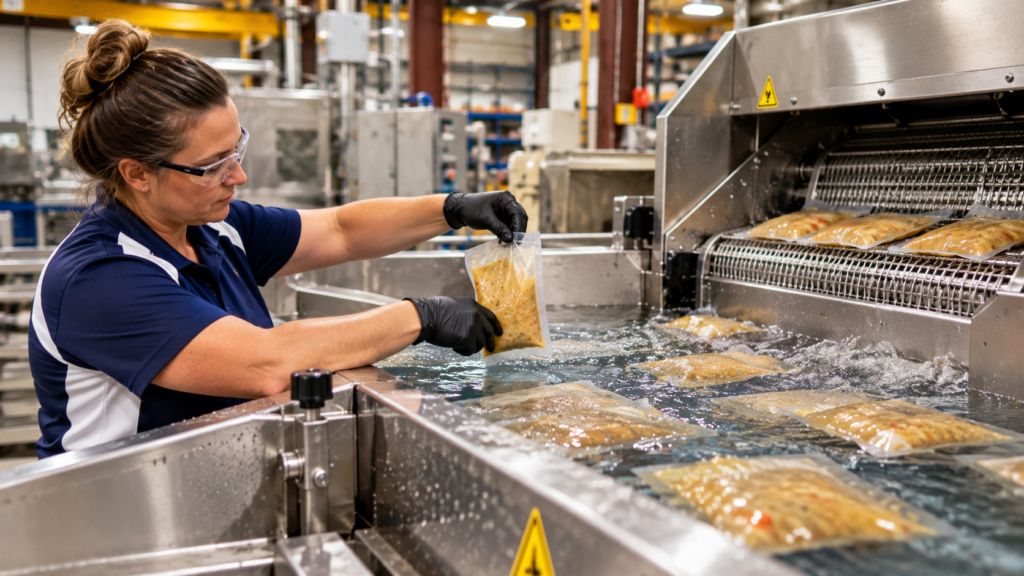
Hot-filled flexible pouches are everywhere—soups, sauces, chowders, sous-vide meal components, pouched pet foods—because they cut packaging cost and simplify distribution. But hot-fill only works when the cooling step is engineered like a critical control point. Not treated like post-fill housekeeping.
This breaks down pouch cooling methods for food processing specifically for hot-filled liquid and semi-liquid products. Selection criteria your engineering, operations, and QA teams can use before committing to layout, utilities, and validation planning.
THE REAL PROBLEM: CORE TEMPERATURE LAGS
With pouches, you can cool the surface quickly and still lose the battle at the core. Thick fills, viscous products, particulate loads, larger pouch formats—all create a thermal inertia problem. Core temperature stays elevated. Risk increases. Quality degrades.
What we’re seeing on plant floors right now:
- Auditability: Documented cooling curves, repeatable outcomes
- Space constraints: Smaller footprints, higher throughput
- OPEX control: Water/energy reduction without sacrificing cooling rate
- Product protection: Fewer seal failures, less abrasion, less rework
POUCH COOLING METHODS FOR FOOD PROCESSING: HOW THEY COMPARE FOR HOT-FILL
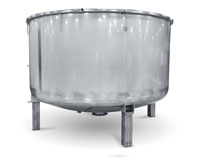
STATIC TANKS: SIMPLE, BUT HARD TO STANDARDIZE
Static tanks often become the default when a line launches quickly. Then they struggle with:
- Temperature stratification in the tank
- Uneven cooling inside stacked baskets
- Limited throughput scaling (you add tanks, labor, floor space)
Use it when: Volumes are low and you can tolerate long dwell times.
Avoid it when: You need consistent, validated cooling across multiple pouch SKUs.
SPRAY / DELUGE CONVEYORS: BETTER FLOW, INCONSISTENT CONTACT
Deluge systems improve continuous flow, but the limiting factor is contact uniformity. Especially when:
- Pouches overlap
- Product rides in pockets
- Belt patterns create dry zones
Use it when: Pouches are uniform, flat, single-layer presentation guaranteed.
Watch for: “Looks cooled” product that still exits warm at the core.
SPIRALS: OFTEN A COMPROMISE FOR CORE COOLING
Air-based spiral chilling/freezing equipment can be a mismatch for dense, hot-filled liquids. You may gain throughput but lose cooling efficiency per square foot and struggle with core pull-down.
Use it when: You already have a spiral and the cooling spec is modest.
Avoid it when: Discharge temperature spec is tight and SKU variety is high.
SUBMERGED IMMERSION: THE HEAT TRANSFER ADVANTAGE
Immersion increases the heat transfer coefficient because water contact is continuous, not intermittent. For hot-fill pouch formats, this is the baseline method many teams move toward.
But not all immersion is equal. Weak agitation means slower, non-uniform cooling.
AGITATED IMMERSION: DESIGNED FOR SPEED + UNIFORMITY
When the system actively moves water around each pouch, it breaks the thermal boundary layer and drives faster, more even cooling.
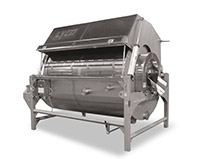
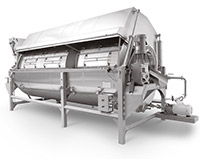
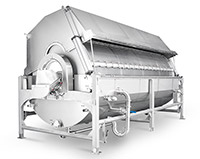
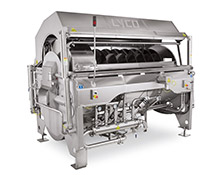
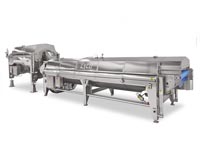
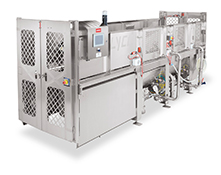
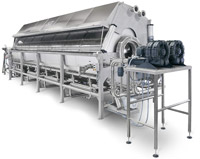
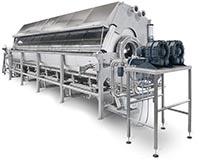
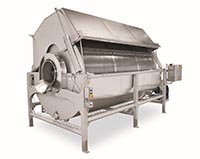
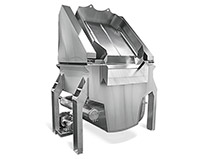
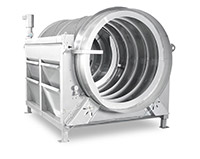
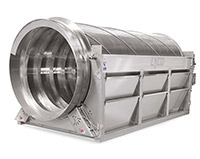
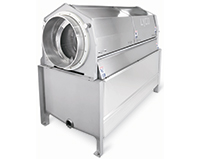
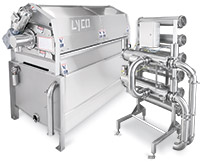
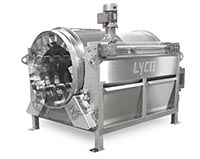
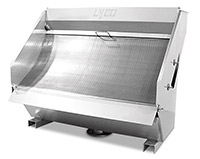
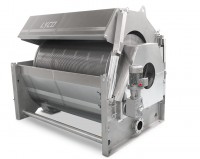
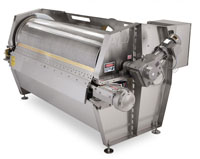
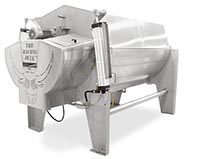
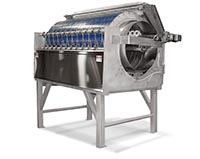
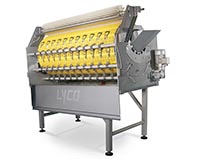
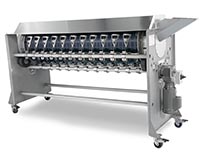
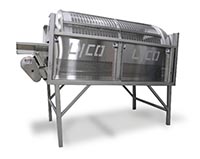
Lyco’s Chill-Flow™ is positioned here: a compact system using patented Hydro-Flow® submerged agitation, true FIFO flow, and gentle water-cushioned handling to minimize damage while cooling a broad range of pouch sizes efficiently.
WHAT “GOOD” LOOKS LIKE: A HOT-FILL COOLING CHECKLIST
Before selecting equipment (or before an OEM integrates it), define pass/fail criteria:
PROCESS + SAFETY
- Target discharge core temperature by SKU
- Cooling curve requirements (time at temperature bands)
- Validation plan: where probes go, how many samples, worst-case selection
QUALITY
- Emulsion stability (oil/fat separation)
- Particulate integrity (breakage, texture)
- Seal strength and burst performance after cooling
OPERATIONS
- Throughput (lb/hr, pouches/min) at peak
- Changeover expectations (size range, lane adjustments)
- Cleanability: drainability, access, biofilm risk reduction
UTILITIES
- Water use and heat rejection approach
- Energy consumption and recoverability options
- Plant floor footprint and elevation constraints
INDUSTRY PATTERN WE SEE REPEATEDLY
A processor launches a new pouch soup line using a static tank “temporarily.” SKU count expands. Pouch sizes range from single-serve to family size. Output rises. Suddenly the plant sees:
- Inconsistent discharge temps
- Longer hold times before case packing
- Added QA sampling and quarantines
- More pouch scuffing from manual handling
The fix is rarely “more sampling.” It’s usually a shift to continuous, uniform immersion cooling with engineered agitation and FIFO control.