




Continuous Cooker vs Batch Kettle ROI for Multi-SKU RTE Lines: Changeover Math That Holds Up
WHY MULTI-SKU PRODUCTION CHANGED THE ROI EQUATION
The strongest business case for a continuous system often isn’t “more pounds per hour.” It’s more saleable pounds per scheduled hour—especially when you’re running pasta, rice, vegetables, beans, and proteins on the same line, with multiple product changeovers per day.
This is the current market reality: SKU proliferation, shorter runs, allergen complexity, and labor constraints. Batch kettles can still work in stable, long-run environments, but they struggle to stay efficient when the schedule is fragmented.
When you evaluate continuous cooker vs batch kettle ROI, model the plant you actually have now—not the plant you had five years ago.
THE CHANGEOVER PENALTY: WHAT BATCH SYSTEMS MAKE YOU PAY FOR
Batch kettles require more:
- Manual intervention (dumping, refilling, scraping, rinsing)
- Tear-down and inspection points
- Operator judgment for endpoints (time/temperature, visual checks)
- Cleanup time after starch-heavy or sticky products
In multi-SKU reality, the penalty compounds with:
- Allergen transitions
- Different cook targets (al dente vs fully cooked, different grain varieties)
- Different downstream cooling requirements
Target keyword cluster: ROI continuous cooker multi SKU, changeover downtime batch kettle, CIP changeover RTE line, sanitation labor reduction cooking.
ROI MODEL: “MINUTES LOST PER CHANGEOVER” IS YOUR PRIMARY KPI
To build an awareness-level ROI model without getting trapped in vendor-specific numbers, start here:
STEP 1 — COUNT CHANGEOVERS AND THEIR REAL DURATION
Track:
- Last good product to first good product (not “sanitation start to stop”)
- Startup losses (off-spec moisture, temperature drift, clumps, breakage)
- Time spent waiting on QA release
STEP 2 — ASSIGN A COST TO CHANGEOVER MINUTES
Use one of these approaches:
- Contribution margin per minute of scheduled production
- Pounds/minute × margin per pound
- OEE-based cost of lost availability
STEP 3 — ADD THE STARTUP YIELD LOSS
Changeovers create off-spec product:
- Under/overcooked particulates
- Clumped pasta/rice
- Temperature variability that forces holds or rework
- Excess purge that hits drained weight
That loss is often larger than plants estimate because it gets normalized away in weekly averages.
WHAT CONTINUOUS SYSTEMS CHANGE (WHEN DESIGNED FOR SANITARY, FAST SWITCHING)
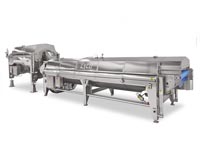
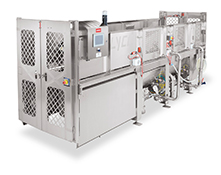
A continuous system engineered for hygienic design and CIP reduces:
- Manual cleanup labor and variability
- Water usage tied to repeated dump-and-fill
- Startup variability through tighter control and steadier thermal conditions
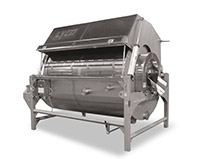
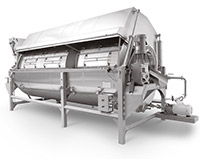
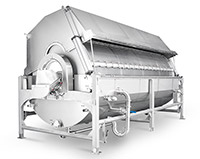
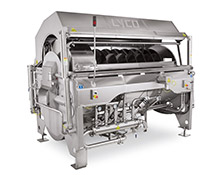
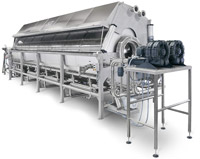
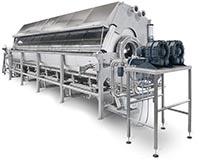
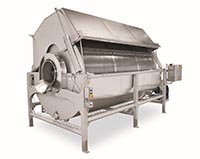
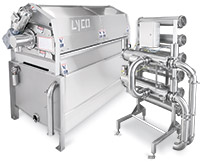
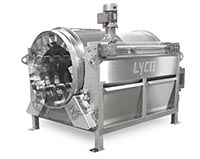
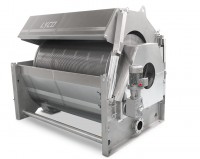
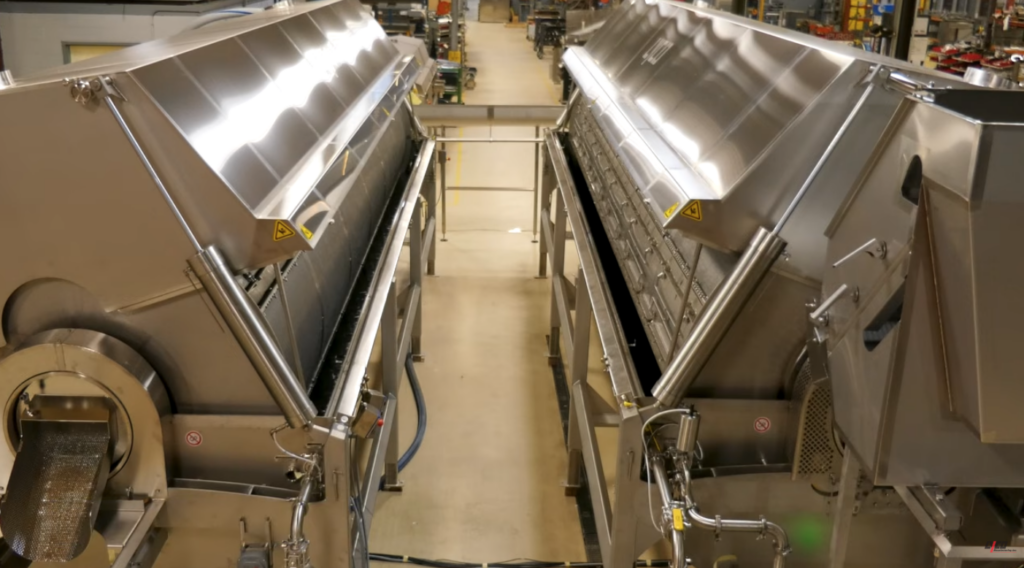
Clean-Flow® targets multi-product operations with 95% self-cleaning CIP design and Hydro-Flow® agitation for uniform processing and reduced clumping/sticking. For lines where cooling is the bottleneck, integrating a rapid cooling stage (or selecting an integrated cook-cool design) eliminates the “cooling queue” that quietly throttles packaging.
AWARENESS CHECKLIST: WHEN CONTINUOUS COOKING USUALLY WINS ROI IN RTE
You don’t need a quote to identify fit. If you see (3+) of these conditions, continuous is worth deeper evaluation:
- You fight clumping, sticking, or uneven cook in pasta/rice/veg blends
- You need repeatable quality across shifts with less operator dependency
- Your wastewater bill is climbing due to higher BOD/TSS surcharges
- You’re space-limited and can’t add another kettle bank
- You’re trying to standardize low care/high care practices and improve hygienic zoning
Target keyword cluster: continuous cooker vs kettle for RTE, hygienic continuous cooking, reduce clumping pasta cooker, reduce sanitation downtime food processing.
INDUSTRY EXAMPLE: PLANT-FLOOR REALITY
A prepared meal producer running rice, pasta, vegetables, typically sees:
- Frequent kettle changeovers, rising sanitation headcount, and inconsistent texture across shifts
- Cooling constraints that force product holds, which increases food safety exposure time and scheduling friction
- High water turnover and downstream screening burden due to starch and fines
In these situations, ROI discussions move from “equipment speed” to:
- Changeover compression
- Reduced startup scrap
- More consistent moisture and texture
- Lower total water turnover per pound produced
PRACTICAL TAKEAWAYS
- In multi-SKU RTE plants, the ROI battle is often won with CIP time and startup yield, not nameplate capacity.
- Track “last good to first good,” then convert minutes into margin, and include startup losses—this is where batch kettles underperform.
- Continuous systems designed for sanitary, repeatable changeovers align with current market pressures: labor, documentation, and SKU volatility.
QUESTIONS? CLICK HERE OR CALL 920-623-4152
https://lycomfg.com/contact-us/contact-form