



FROM SOAK TO COOK-CHILL: HOW TO IMPROVE DRY BEAN HYDRATION EFFICIENCY AND FINISH QUALITY IN READY MEALS
THE MARKET CONTEXT: READY MEALS ARE DRIVING NEW BEAN PROCESS EXPECTATIONS
Beans aren’t just a commodity ingredient anymore. They’re a primary component in ready meals, refrigerated sides, high-protein bowls, and multi-SKU prepared foods. That brings new requirements that hit the plant floor:
- Tighter texture specs (no mush, no hard centers)
- Better appearance (fewer splits, less skins)
- Food safety pressure (fast cool to <40°F, documented controls)
- Frequent changeovers (different beans, sauces, inclusions, batch sizes)
Improving dry bean hydration efficiency in this environment means building a repeatable soak → cook → cool system that maintains yield and texture while meeting time/temperature rules.
HYDRATION EFFICIENCY IS REALLY A “TOTAL PROCESS” PROBLEM
Plants often isolate hydration as its own step. In ready meal operations, it’s tied directly to cook-chill outcomes:
- Hydration variability changes cook endpoint time, which throws off schedule timing
- Overcooked beans break down, add solids to process water, and complicate liquid-solid separation downstream
- Slow or inconsistent cooling increases risk, reduces shelf life, and can force holds
STEP 1: SOAK FOR UNIFORMITY, NOT MAXIMUM SPEED
For ready meals, a “fast soak” that causes texture spread is usually a net loss.
Focus points:
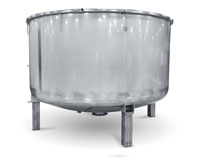
- Uniform water access and distribution in the tank
- Stable soak temperature
- Consistent discharge to avoid segregation
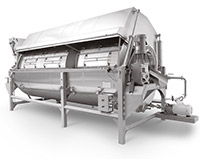
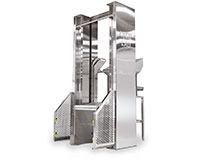
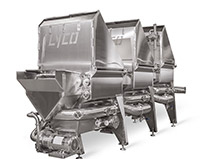
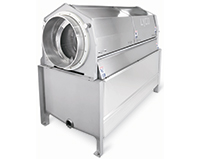
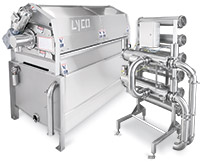
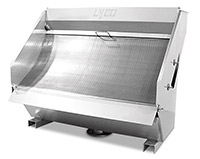
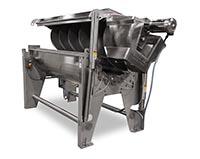
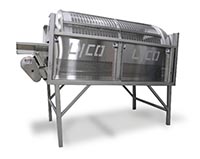
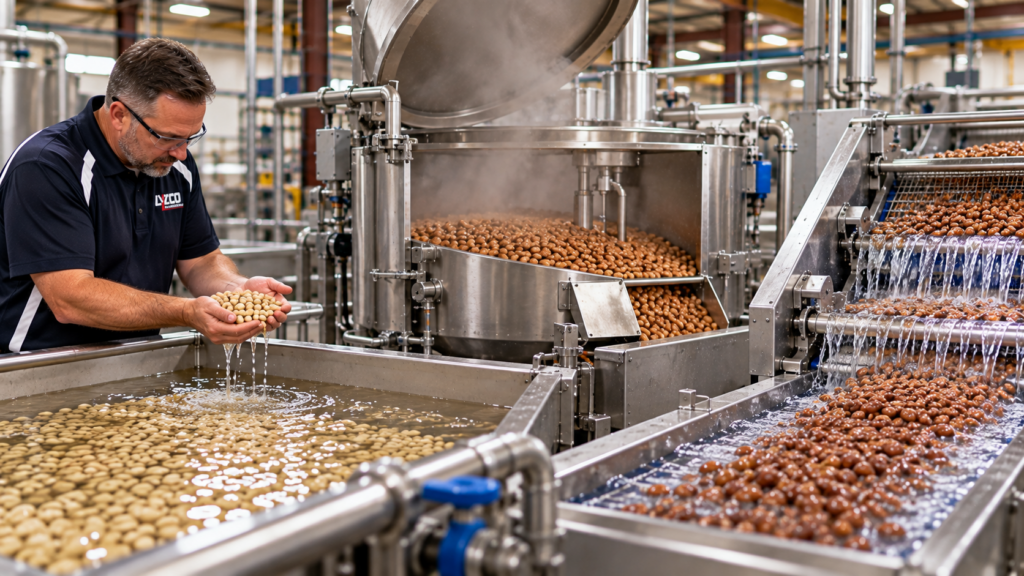
Lyco’s Continuous blanching/hydrating systems are commonly used to replace batch soak tanks & stabilize’s hydration and yeilds through the entire line..
STEP 2: CONTROLLED BLANCH/COOK THAT DOESN’T DAMAGE BEANS
Once beans are consistently hydrated, continuous cooking can be tuned for:
- Target tenderness
- Minimal splits
- Predictable retention time for throughput planning
Why operations teams care: When the blanch/cook step is stable, you reduce overprocessing, protect yield, and stop chasing texture across shifts.
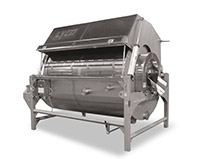
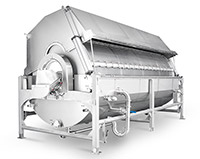
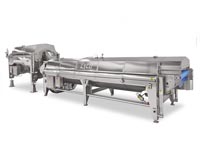
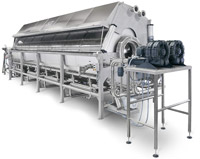
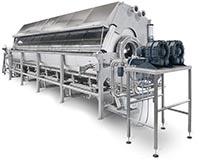
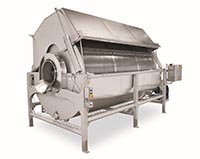
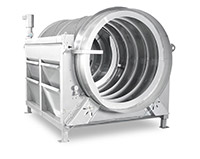
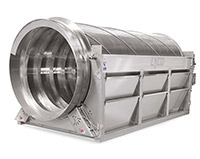
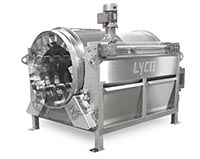
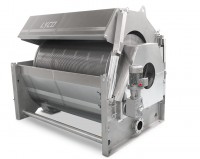
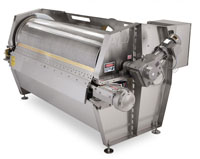
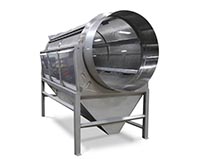
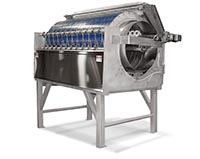
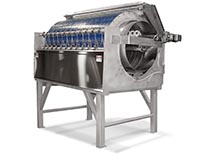
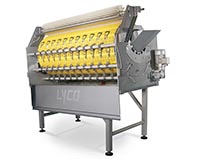
Lyco Manufacturing’s Rotary Drum Blancher is designed for consistent temperature and controlled retention time in a compact footprint, with gentle agitation that protects product integrity. Retention times from 60-90 minutes cover most bean applications, and the drum design handles the gentle processing beans require.
STEP 3: RAPID, REPEATABLE COOLING IS PART OF “HYDRATION EFFICIENCY”
In ready meals and refrigerated formats, cooling performance is not optional. If beans sit warm too long, you lose:
- Texture (continued softening)
- Yield (breakdown and purge)
- Food safety margin
Hydration efficiency shows up here because consistent hydration creates consistent thermal behavior—meaning you can cool predictably.
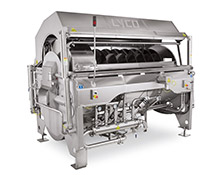
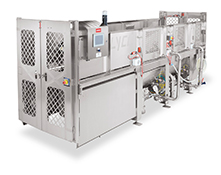
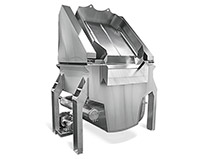
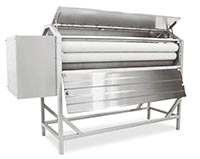
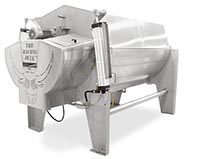
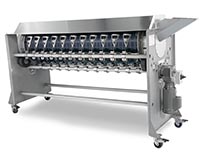
For plants running multiple SKUs and needing flexible cook–cool in one system, Cooker Cooler platforms emphasize uniform processing and rapid cooling to sub-40°F, supporting food safety and quality in frequent changeover environments. The same system handles cooking and cooling, which reduces handling steps and keeps beans moving through the process without staging delays.
COMMON FAILURE MODES (AND WHAT THEY COST)
1) “We soak long to be safe.”
Cost: higher splits, lower yield, more solids load, more cleanup.
2) “The cooker fixes it.”
Cost: capacity loss, energy spike, uneven texture, schedule instability.
3) “Cooling is a bottleneck.”
Cost: holds, shelf-life risk, labor added to manage timing.
A SIMPLE AWARENESS-STAGE ROADMAP: WHERE TO START
If you’re early in the research phase, don’t start with equipment. Start with mapping:
- Define your bean varieties and finished texture specs by SKU
- Document soak endpoints (pickup/moisture/texture) and variability
- Document blanch/cook retention time and endpoint variability
- Document time-to-chill and cooling endpoint (<40°F)
- Identify the constraint: soak capacity, cook capacity, cooling capacity, sanitation turnover
This process map makes it obvious whether you need tighter controls, better sequencing, or different mechanical design.
PRACTICAL TAKEAWAYS FOR OPERATIONS AND ENGINEERING
- Hydration efficiency is measured by uniformity + yield + predictable downstream performance
- Stable soaking reduces the need for aggressive cooking correction
- Controlled blanching improves texture and reduces splits and skins
- Rapid cooling preserves texture, protects safety margins, and improves shelf-life outcomes
- The best wins come from treating soak–cook–cool as one integrated system
NEXT STEP
If you want to pressure-test your soak–cook–cool workflow and identify the actual bottleneck (capacity, variability, sanitation time, or cooling), we can help.