




FULLY ABSORBED RICE COOKING PROCESS MOISTURE CONTROL: THE LEVERS THAT DECIDE YIELD, TEXTURE, AND PACKAGING PERFORMANCE
Rice isn’t a standalone product anymore in prepared foods. It’s an ingredient that has to survive mixing, conveying, depositing, sealing, chilling/freezing, distribution, and reheat. That’s why processors are tightening specs around the fully absorbed rice cooking process—moisture content dictates texture, clumping, and how rice behaves in a tray, pouch, or bowl.
If your team is fighting “sticky today, dry tomorrow,” you don’t have a rice problem. You have a moisture control system problem.
THE MARKET SHIFT: FROM “EATABLE RICE” TO “PROCESSABLE RICE”
Two production realities are pushing moisture control to the front of the line:
- High-mix SKU schedules: multiple rice types (white, brown, basmati, jasmine), multiple inclusions, multiple sauces, one day
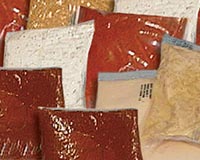
- Packaging formats expanding: MAP trays, retort pouches, frozen bowls, refrigerated kits—each reacts differently to moisture and free water
In this environment, “close enough” rice becomes expensive rice—rework, giveaway, downtime, sanitation, and customer complaints.
WHAT OPERATIONS TEAMS ARE SEARCHING FOR
These are the phrases that show up when plants diagnose a fully absorbed rice cooking process:
- fully absorbed rice cooking process moisture control
- continuous rice cooker for low-moisture rice
- how to prevent clumping in cooked rice
- first-in first-out rice cooking for consistency
- water-to-rice ratio control in industrial cooking
- sanitary continuous cooking system for RTE rice
6 MOISTURE LEVERS THAT ACTUALLY MOVE THE NEEDLE
Most teams focus on “cook time and temp.” Those matter, but fully absorbed rice is dominated by water availability and kernel uptake dynamics.
1) Water-to-rice ratio (mass balance discipline)
- Lock down scale calibration, check work instructions, remove “operator math” where possible
- If the ratio drifts, yield and texture drift with it—every time
2) Water delivery method and distribution
- Uneven water addition creates uneven hydration, which shows up as mixed texture and clumping
- Look for channeling, dead zones, and inconsistent bed depth
3) True residence time (FIFO vs. blended flow)
- Fully absorbed rice punishes wide residence time distribution
- FIFO processing supports uniformity; mixed residence creates “some perfect, some not”
4) Agitation intensity
- Too little: sticking and clumps
- Too much: kernel damage, starch release, mush, smear on downstream belts
5) Thermal stability under load changes
- Start-up and post-changeover are where most moisture defects originate
- Temperature sag changes uptake rate; you can’t “cool your way out” of it later
6) Post-cook handling and cooling
- Even in fully absorbed systems, the product needs controlled handling
- Rapid cooling is not optional in many RTE or extended shelf-life workflows; it protects texture and reduces risk exposure
DEFECT-TO-CAUSE MAPPING (FAST DIAGNOSTICS)
When QA flags an issue, map it to a lever instead of guessing:
| Defect | Likely Cause |
| Clumping / sticking | Surface starch + insufficient movement, uneven hydration, overwatered addition zone |
| Dry bite / hard core | Under-time, temperature instability, uneven water distribution |
| Mushy / broken kernels | Over-agitation, over-time, too much water availability |
| Pack purge / free water in tray | Ratio too high, poor absorption completion, insufficient equilibration before pack |
MONITORING THAT HELPS OPERATIONS (NOT JUST QA)
Add monitoring that tells operators what to do, not just what went wrong.
- Inline temperature and trend alarms during changeovers and load swings
- Recipe/PLC parameter locks to reduce “helpful adjustments” mid-run
- Moisture checks by lot + shift tied to actual ratio and residence conditions
- Yield reconciliation that separates true yield from water pickup variability
Plants that treat moisture as a controlled variable (not an outcome) run fewer “mystery events.”
WHERE CONTINUOUS, SANITARY DESIGN SHOWS UP IN THE RESULTS
In multi-SKU plants, sanitation and changeover speed are now process variables. If cleanup time forces shortcuts, product consistency collapses.
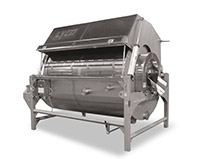
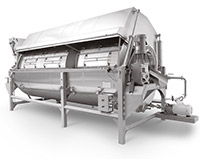
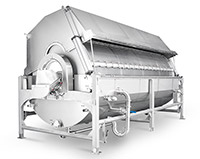
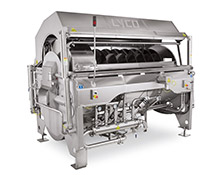
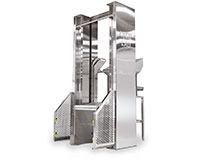
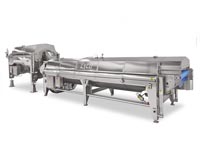
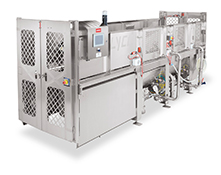
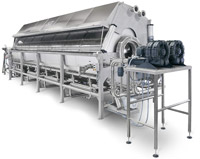
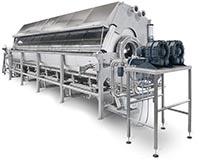
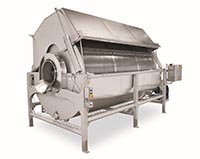
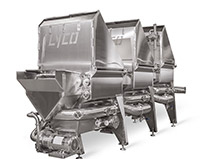
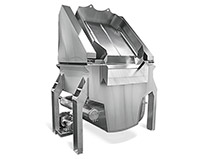
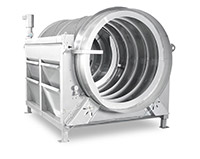
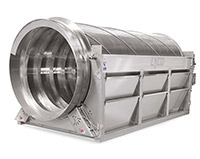
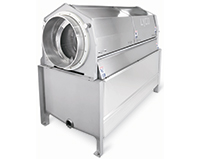
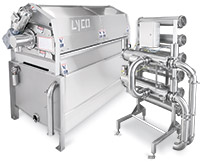
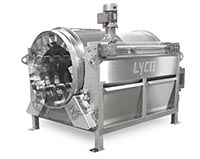
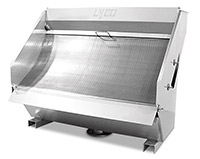
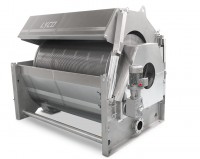
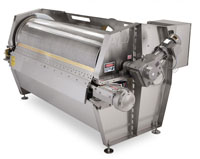
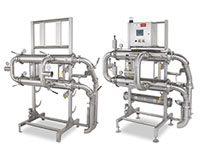
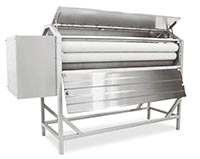
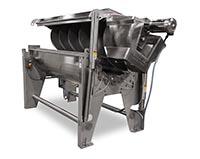
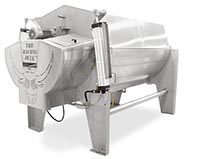
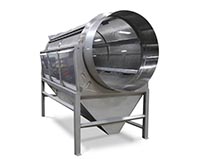
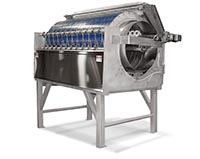
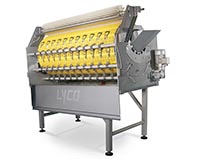
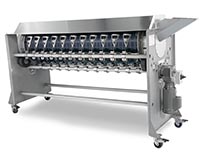
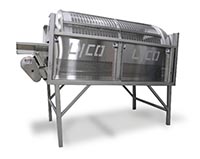
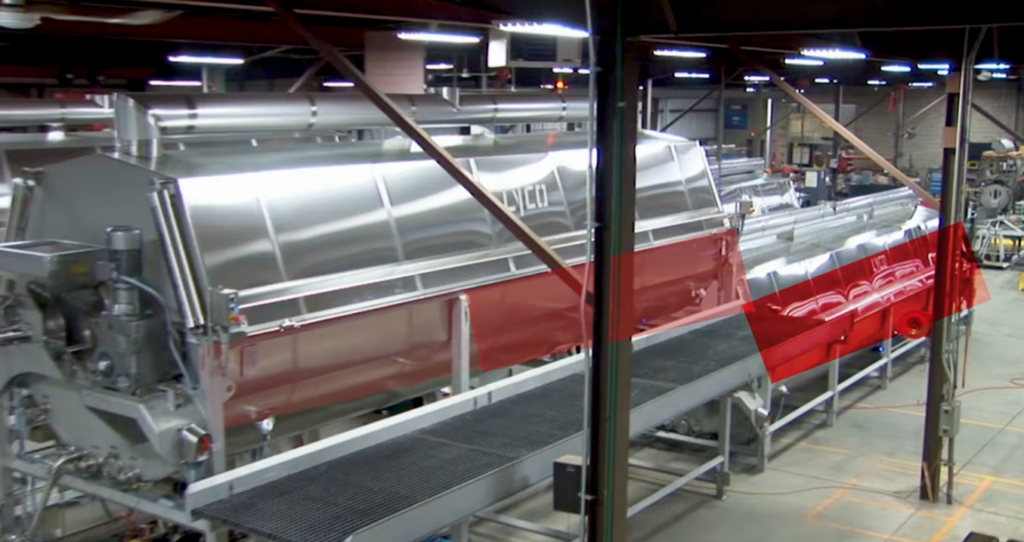
This is where systems designed for CIP and hygienic construction matter, especially for RTE environments. Lyco Manufacturing’s Clean-Flow® is positioned around high-yield continuous cooking/cooling with a CIP-forward approach, while Temper-Flow® targets fully absorbed, low-moisture rice profiles at high volume. For flexible, smaller-capacity cook/chill needs across multiple products, Versa-Flow™ is often evaluated as a consolidation move.
PRACTICAL TAKEAWAYS
- Moisture control is the governing variable in fully absorbed rice—manage it like a spec, not a symptom.
- Defects map back to a small set of levers: ratio, distribution, residence time, agitation, thermal stability, handling/cooling.
- Sanitation and changeover design now influence moisture consistency because they dictate how repeatable the process really is.
Questions? Call 920-623-4152