




FULLY ABSORBED RICE COOKING PROCESS: WHAT IT IS, WHY IT’S TRENDING, AND WHAT OPERATORS CONTROL
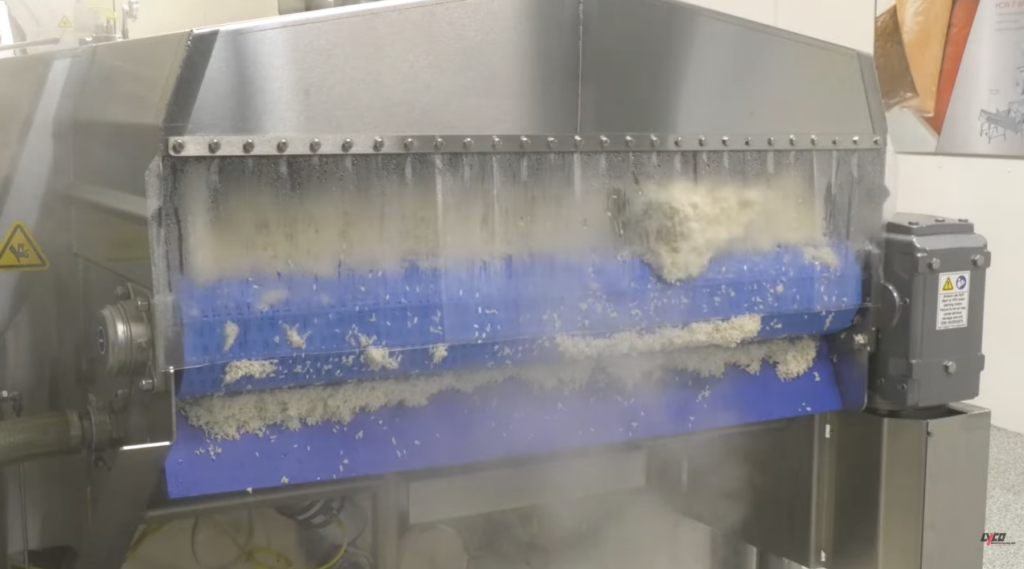
“Fully absorbed rice” keeps showing up in production meetings—and for good reason. Prepared foods, RTE bowls, frozen meals, and ingredient packs all need rice that behaves predictably through mixing, portioning, and packaging. The fully absorbed rice cooking process solves two problems plants get squeezed on daily: water management (utility cost, wastewater loading, discharge limits) and process variability (labor gaps, frequent changeovers, inconsistent cook quality).
This isn’t a new technique. But it’s trending again because processors need tighter moisture specs, longer shelf life, and repeatable downstream performance—without relying on operators who may not be there next month.
Here’s the operator-minded breakdown: what “fully absorbed” actually means, what you control, what commonly goes wrong, and what to track so your line runs like a system instead of a series of rescues.
WHAT “FULLY ABSORBED” REALLY MEANS ON THE PLANT FLOOR
A fully absorbed rice cooking process is designed so the rice takes in essentially all process water during the cook, leaving minimal free water to drain, screen, pump, or treat. In practical terms:
- Lower-moisture cooked rice that handles, conveys, portions, mixes, and packages with less water carryover
- Less liquid-solid separation demand (fewer screens, fewer “mystery losses,” fewer floor drains doing the work)
- More predictable yield accounting because water uptake is part of the spec, not an uncontrolled variable
It does not mean “dry rice,” “no steam,” or “no water use.” It means the cook is controlled so water ends up in the kernel, not in your drain trench.
WHY THIS PROCESS IS GETTING PRIORITY IN 2026 PRODUCTION MEETINGS
Walk into any North American prepared foods plant and you’ll hear the same drivers:
- Wastewater pressure: higher surcharges, tighter FOG rules, more enforcement on TSS/BOD, renewed focus on reusing process water
- SKU proliferation: more bowl varieties, more short runs, more mid-shift changeovers, more sanitation cycles
- Labor scarcity: less “tribal knowledge” available to nurse batch kettle variability back into spec
- Food safety + shelf life: rapid, consistent cooling and controlled moisture reduce risk windows and quality drift
Fully absorbed rice gets selected because it’s easier to standardize than drain-and-rinse styles—if the plant controls are built for it.
THE CORE VARIABLES: TIME, TEMPERATURE, TURBULENCE, AND WATER RATIO
Most teams try to “fix” rice downstream—extra cooling, extra oil, extra mixing. Fully absorbed rice has to be fixed upstream, inside the cook profile.
Key controls that drive consistency:
- Water-to-rice ratio (by weight): the single largest driver of final moisture and yield
- Cook temperature setpoint and stability: not just the number, but how tightly it holds under load changes
- Residence time (true first-in/first-out vs. mixed residence): critical for uniformity—avoids hard centers and soft edges
- Agitation style: enough movement to prevent sticking and clumping, not so aggressive it breaks kernels and releases starch
- Inlet distribution: even feed prevents channeling and uneven hydration across the bed
Plants chasing repeatability lean toward continuous, FIFO cooking because it removes a lot of “operator interpretation” from the batch cycle.
COMMON FAILURE MODES (AND WHAT THEY LOOK LIKE IN QA)
Most “bad rice” complaints are process signatures you can diagnose fast.
1) Clumping / balls
- Usually driven by surface starch + insufficient movement, or overhydration early in the cook
- Shows up as portioning issues, inconsistent fill weights, downstream mixer torque spikes
2) Hard core / undercooked kernel
- Often a residence-time distribution issue (some rice not seeing full cook time), or temperature sag at peak load
- Shows up as chew defects and customer complaints after reheat
3) Mush / smear
- Overcooking, too much turbulence, or too much available water
- Shows up as poor IQF performance, smear on belts, high loss during transfers
4) Yield volatility
- Usually water ratio drift, poor scale discipline, or inconsistent steam/hot water energy delivery
- Shows up as “unexplainable” over/under-yield by shift
ACTIONABLE PROCESS CHECKS (WHAT TO TRACK THIS WEEK)
Want a quick stabilization plan? Run these checks across three production days:
- Water ratio verification: confirm scale accuracy, re-check operator work instructions, audit actual additions vs. target
- Residence-time mapping: confirm that “10 minutes” means every kernel gets ~10 minutes, not “some get 6, some get 14”
- Cook energy stability: trend temperature and energy input across start-up, steady state, and changeover
- Product handling review: identify where rice is being damaged (tight augers, long drops, aggressive pumps)
- Cooling requirement: if you’re moving into RTE territory, verify your ability to cool rapidly and predictably (sub-40°F targets are common for safety and shelf-life control)
WHERE EQUIPMENT STRATEGY FITS
A fully absorbed rice cooking process is less forgiving than “cook and drain.” That’s why plants evaluating upgrades focus on:
- Continuous, first-in/first-out cooking for uniformity
- Recipe-driven controls (PLC-managed profiles) to reduce operator variability
- Gentle agitation to limit breakage and starch release
- Sanitary design + CIP readiness to survive multi-SKU reality without hours of teardown
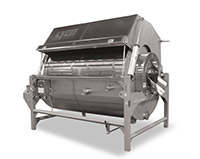
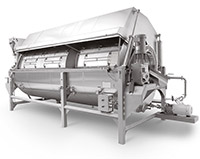
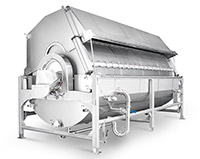
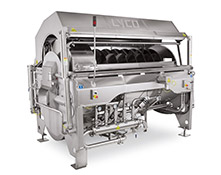
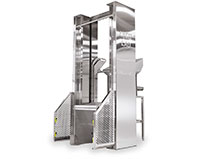
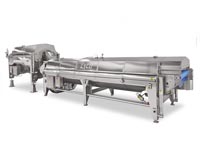
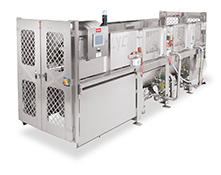
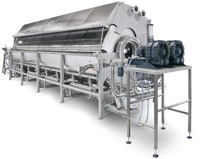
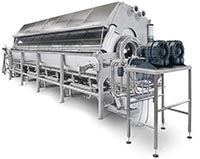
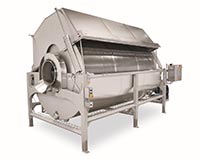
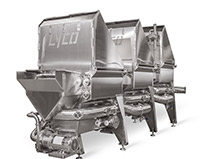
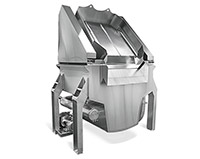
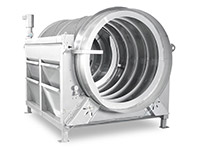
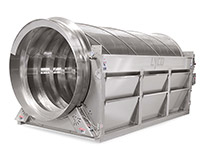
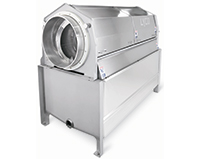
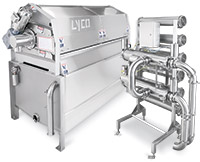
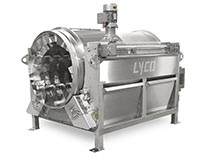
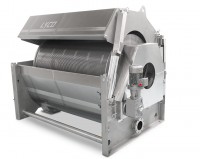
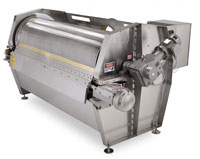
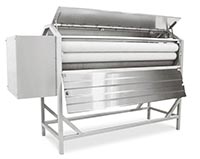
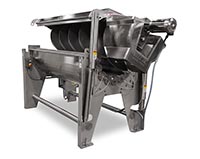
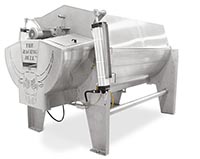
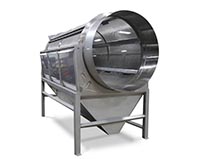
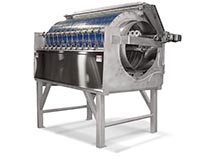
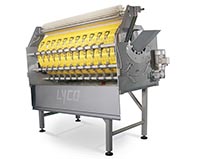
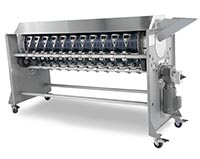
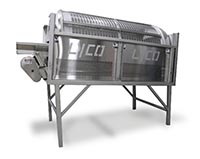
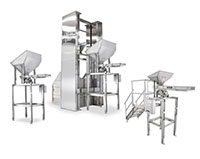
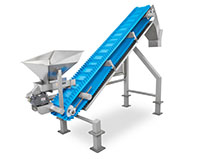
Lyco Manufacturing’s Temper-Flow® platform is purpose-built around fully absorbed, low-moisture rice, often engineered as part of a broader cook/chill system with Clean-Flow® or other cooking/cooling assets depending on the product set and food safety targets.
PRACTICAL TAKEAWAYS
- Fully absorbed rice is a yield + wastewater + consistency strategy, not a chef trick.
- The process wins when water ratio, residence time, and agitation are controlled like critical parameters.
- Continuous FIFO cooking and recipe-driven automation are trending because plants can’t afford shift-to-shift variability.