



INDUSTRIAL SOUS VIDE PROCESSING EQUIPMENT FOR POUCHED PET FOOD: SAME THERMAL LOGIC, HARDER REALITY
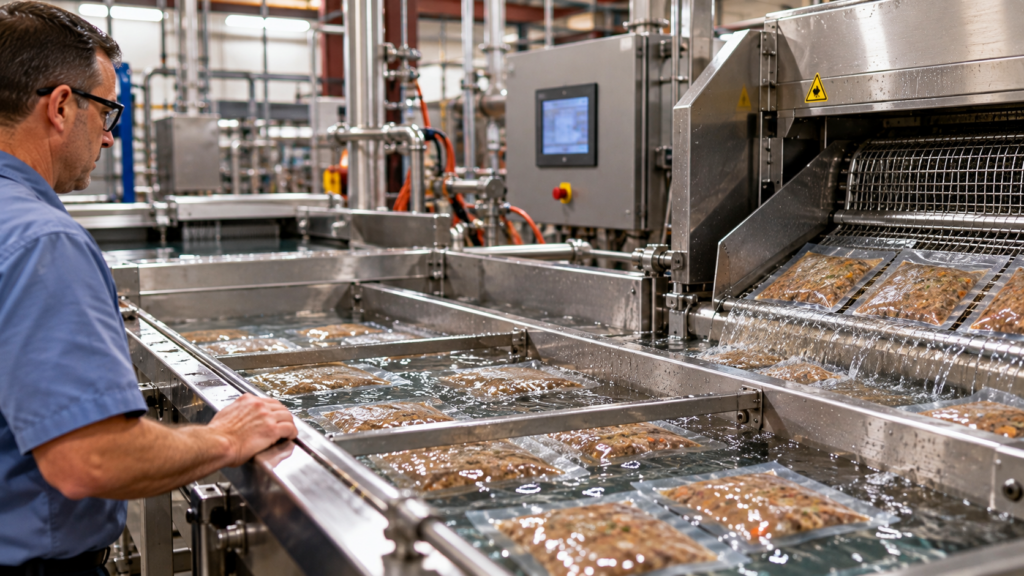
Pouched pet food is adopting more “human food” processing expectations—better texture, cleaner labels, tighter QA documentation, higher throughput. The retail shelf demands it. Private label customers demand it. Auditors demand it.
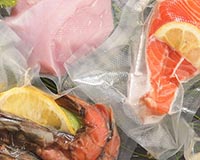
That’s why “industrial sous vide processing equipment” is increasingly relevant beyond ready meals. The common denominator is the same: sealed flexible packaging, hot-fill or cook-in-pouch profiles, and a cooling step that must be fast, uniform, and provable.
If you’re running gravies, stews, broths, emulsified blends, or high-fat formulations, cooling is where you’ll see the biggest gap between theory and plant performance.
WHY POUCHED PRODUCTS ARE DRIVING NEW EQUIPMENT RESEARCH
Current market drivers pushing awareness-stage research:
PREMIUMIZATION IN PET FOOD
Higher ingredient quality, better appearance standards, less tolerance for defects. The bar is higher.
HIGH-MIX PRODUCTION
More flavors, more pouch sizes, shorter runs. Changeover complexity is up.
SUPPLY CHAIN VOLATILITY
Packaging and ingredient changes that affect viscosity, fill weight, and heat transfer. What worked last month may not work this month.
LABOR SHORTAGES
Less manual intervention tolerated, more need for continuous, stable flow. You can’t staff around the problem anymore.
These drivers force a rethink of cooling systems and pouch handling, not just cook systems.
THE MOST COMMON PLANT-FLOOR PROBLEMS IN POUCH COOLING
In pet food pouch operations, you’ll typically fight:
- Fat/oil separation and appearance defects when cooling is inconsistent
- Pouch scuffing, corner wear, seal stress from harsh conveying or pile-ups
- Inconsistent exit temperatures across different pouch sizes and fill weights
- WIP accumulation between filler and secondary packaging
- Increased QA holds because cooling data is incomplete or non-repeatable
This is exactly where a continuous cooling system with controlled residence time and gentle handling changes outcomes.
WHAT TEAMS ARE ACTUALLY SEARCHING FOR (NOT JUST “SOUS VIDE”)
When teams search for “industrial sous vide processing equipment,” they often mean one of these:
- Continuous pouch cooling equipment for hot-filled products
- Industrial sous vide cooling system with FIFO flow
- High-capacity pouch chiller for sauces, soups, gravies
- Submerged agitation cooler for flexible packaging
- Validated rapid cooling equipment for RTE and pet food
The “sous vide” label is shorthand for controlled thermal processing with predictable quality. Cooling is the step that makes it real at commercial scale.
WHAT GOOD LOOKS LIKE: A COOLING STEP BUILT FOR POUCH REALITY
A high-performing cooling process for pouched pet food should deliver:
UNIFORM HEAT REMOVAL
Not just cold water—consistent heat transfer across the pouch surface. Agitation matters.
GENTLE, CONTROLLED MOVEMENT
Water-cushioned movement prevents abrasion and reduces seal damage. Drop points are where pouches fail.
TRUE FIFO AND CONTROLLED RESIDENCE TIME
FIFO supports traceability and reduces variation across the run. No “short-cooled” pouches reaching packaging.
PROCESS METRICS YOU CAN VERIFY
Exit temperature targets, repeatability, and documentation that supports HACCP plans and customer audits.
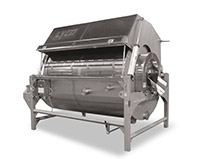
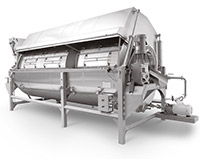
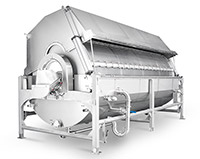
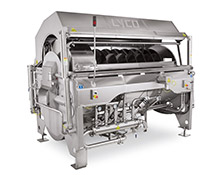
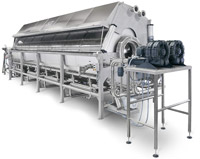
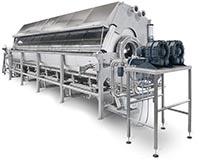
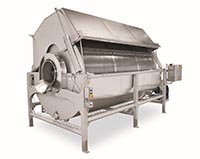
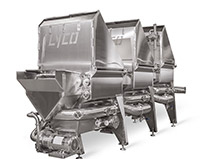
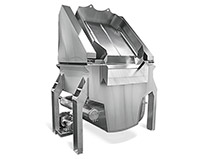
HOW CHILL-FLOW™ SUPPORTS THIS MODEL
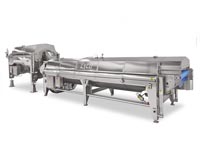
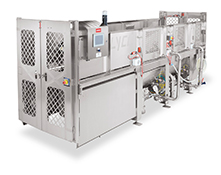
Chill-Flow™ is designed around the key failure modes in pouch plants:
- Patented Hydro-Flow® submerged agitation to increase uniform cooling
- Gentle submerged conveyance that protects flexible packaging
- True FIFO flow for predictable cooling times and validation
- Compact footprint versus long deluge belts or improvised spiral solutions
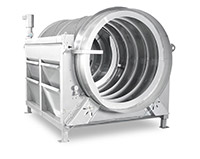
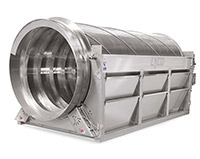
Lyco’s broader point of view is consistent across blanching, cooking, cooling, and screening: rapid, controlled passage through the danger zone, plus water/energy discipline, is the baseline for modern pouch operations—not an upgrade.
PRACTICAL TAKEAWAYS FOR TEAMS BUILDING THE INTERNAL CASE
If you’re gathering information and building alignment across engineering, QA, and operations, focus your research on:
- The cooling claim: What exit temperature, what time, what variation band?
- Your top three pouch damage modes and where they occur in the line
- How you will validate performance during product trials and scale-up
- Footprint and utilities: What it costs to cool faster, not just to cool
This keeps the conversation rooted in plant-floor constraints, not generic “sous vide equipment” definitions.