



POUCH COOLING METHODS FOR FOOD PROCESSING: WHAT ACTUALLY WORKS ON YOUR LINE
Hot-filled pouches solve a lot of problems—labor, packaging cost, distribution flexibility—but they create one requirement you cannot negotiate: rapid, controlled cooling through the bacterial danger zone. If your core temperature profile drifts, you’re chasing shelf-life variability, quality defects (fat separation, starch breakdown, texture loss), and validation paperwork that never quite closes out.
This is a plant-floor guide to pouch cooling methods for food processing. What they are. Where they fit. Where they fail. And what your engineering and QA teams should measure before locking in a line design.
WHY POUCH COOLING IS GETTING MORE ATTENTION NOW
Market pressure is pushing processors toward tighter cooling control, better documentation, and lower operating cost—all at once:
- FSMA preventive controls + customer audits: Cooling steps must be measurable, repeatable, documented. Not “we’ve always done it this way.”
- Higher pouch SKU counts: More sizes, more fill weights, more viscosities (soups vs. sauces vs. gravies vs. pet food slurries). More changeover exposure.
- Energy and water scrutiny: Sustainability reporting, municipal water constraints, rising utility costs. Cooling systems have to show real efficiency numbers.
- Labor constraints: Manual tote/tank handling is harder to staff and harder to run consistently shift after shift.
Result: More teams are re-evaluating legacy systems (static tanks, deluge belts) and looking for uniform, verifiable core cooling with less footprint.
THE 5 MOST COMMON POUCH COOLING METHODS (AND HOW TO CHOOSE)
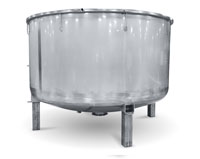
1) STATIC TANK COOLING (BATCH OR SEMI-BATCH)
What it is: Pouches placed in racks or baskets, lowered into a tank, cooled over time.
Where it fits:
- Low volume, long dwell time acceptable
- Limited automation requirements
- Minimal capital budget
Common failure modes:
- Non-uniform cooling—outer pouches cool faster than inner layers
- Poor FIFO control—first-in/first-out is difficult to guarantee
- Handling damage: stacked loads, abrasion, seal stress
Plant-floor reality: If your QA team keeps chasing variability in core temperature logs, static tanks are often the root cause. Not the operators.
2) WATER DELUGE BELT COOLING
What it is: Pouches travel on a conveyor while water sprays/deluges over the product.
Where it fits:
- Flat pouches, limited thickness variation
- Moderate throughput where footprint is available
Common failure modes:
- Shadowing and channeling—water does not contact every pouch surface uniformly, especially on overlapped product
- Temperature gradients persist in thick-fill pouches
- Seal/scuff risk on belts, transfers, accumulation points
Plant-floor reality: Deluge belts look “simple” until you add SKU variety or push rate. Then the uniformity problem shows up.
3) SPIRAL COOLING / SPIRAL FREEZER AS “COOLING”
What it is: Using a spiral system (often designed for chilling/freezing) as a pouch cooling step.
Where it fits:
- Spiral already installed, pouch format compatible
- Surface cooling adequate, core cooling demands modest
Common failure modes:
- Mismatch between heat transfer need and system design—air-based cooling struggles with fast core pull-down on dense, liquid fills
- Large footprint and maintenance overhead
- Product handling risk at infeed/outfeed transfers
Plant-floor reality: Spirals often cool surfaces well but leave core temperature lagging. That’s more time in the danger zone than your validation plan accounts for.
4) IMMERSION COOLING (CONTINUOUS SUBMERGED CONVEYING)
What it is: Pouches conveyed through a submerged water environment. Heat transfer driven by full water contact.
Where it fits:
- High-volume pouch lines needing consistent cooling
- Dense fills where core temperature control matters
- Multi-size pouch programs requiring gentle handling
Common failure modes (in basic immersion designs):
- Weak agitation → boundary layer stays intact → slower cooling
- Poor tracking/FIFO if product floats, overlaps, or recirculates
- Hard-to-verify uniformity if flow is inconsistent
Plant-floor reality: Immersion is the right direction for heat transfer. Performance depends entirely on agitation, flow pattern, and true FIFO control.
5) AGITATED IMMERSION (HIGH-UNIFORMITY, FAST CORE PULL-DOWN)
What it is: Submerged pouch conveying paired with engineered water movement designed to break the boundary layer and drive uniform heat transfer.
Why it’s trending: Teams are prioritizing faster, more uniform cooling with verifiable metrics while reducing damage and footprint.
What to look for:
- Documentable core temperature pull-down by pouch size/fill weight
- True first-in/first-out flow—not “mostly FIFO”
- Gentle handling: water-cushioned conveyance, low-abrasion transfers
- Controls and instrumentation designed for validation and audits
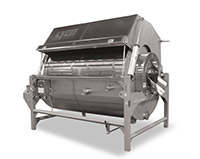
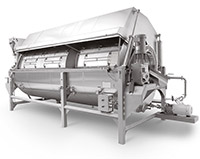
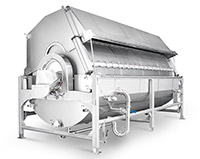
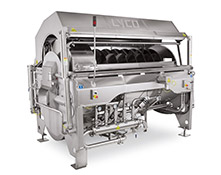
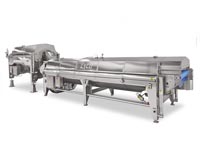
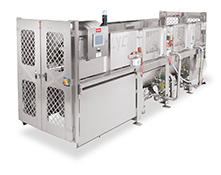
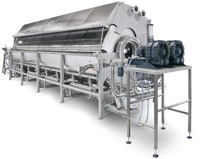
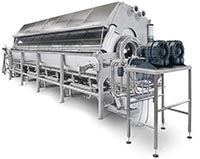
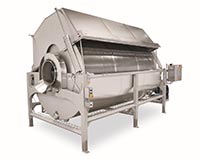
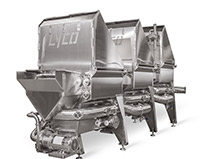
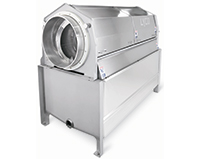
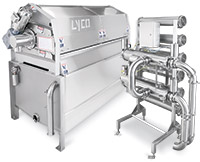
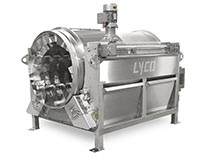
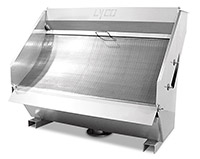
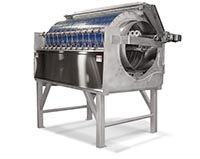
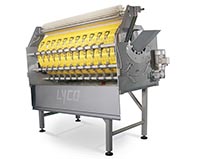
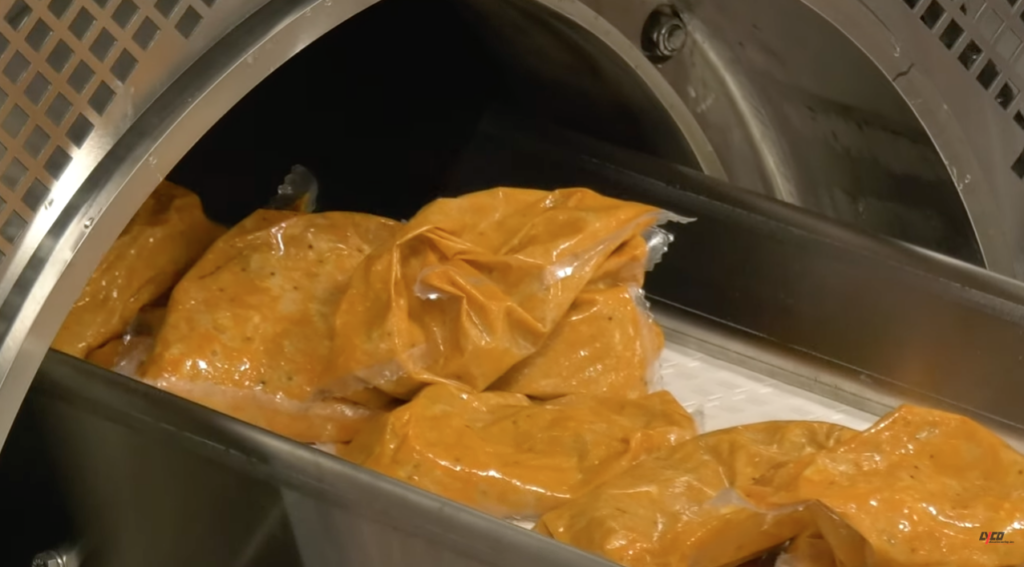
Lyco’s approach: Chill-Flow™ is built around patented Hydro-Flow® submerged agitation, water-cushioned handling, and true FIFO movement. Uniform, rapid passage through the danger zone is where safety, quality, and shelf life are won or lost.
WHAT ENGINEERING + QA SHOULD MEASURE (NOT GUESS)
To evaluate pouch cooling methods for food processing, align on measurable requirements:
- Core temperature at discharge (by SKU, worst-case fill, thickest pouch)
- Time/temperature profile through the danger zone
- Uniformity across lanes, across the belt/bed, across batch positions
- Pouch integrity metrics: burst rates, seal peel performance, scuffing, abrasion
- Water and energy consumption per lb/kg of finished product
- Footprint per lb/hr (kg/hr) of throughput
- Cleanability and sanitation time (drains, access, biofilm risk points)
INTERNAL LINKING OPPORTUNITIES (NATURAL NEXT READS)
If you’re mapping the full line, these topics usually come next:
- How hot-fill parameters affect downstream cooling stability (fill temp, headspace, pouch thickness)
- Designing for process validation (sensor placement, data capture, audit-ready records)
- Integrating cooling with upstream cookers, coolers and screens where applicable (system-level thinking)
PRACTICAL DECISION RULES (FAST FILTER)
- High SKU variety + high throughput → prioritize continuous immersion with engineered agitation
- Can’t prove uniform core temperature across the load → static tanks and basic deluge designs are likely your bottleneck
- Pouches showing scuffing, seal failures, corner wear → handling method matters as much as cooling rate