




PREVENTING PASTA CLUMPING IN FOOD PROCESSING: THE CONTINUOUS-LINE REALITY
PREVENTING PASTA CLUMPING IN FOOD PROCESSING: THE CONTINUOUS-LINE REALITY
The pressure on pasta processors right now is real: higher throughput, fewer operators, more SKUs, tighter sanitation windows. Continuous pasta cook/cool lines make sense in this environment—but they also amplify small problems. A minor retention-time drift or cooling-water solids increase can turn into a full-shift clumping event that costs you thousands in yield loss and rework.
What’s driving this? Ready meals and high-volume prepared foods are demanding consistent pasta texture, stable weights, and longer refrigerated shelf life. That forces better control of cooking uniformity and post-cook cooling. There’s no room for “close enough.”
THE FOUR “CLUMPING ZONES” IN A CONTINUOUS SYSTEM
After working with processors running continuous pasta lines across multiple plant configurations, we’ve identified four zones where clumping originates:
ZONE 1: COOK UNIFORMITY (HOT SPOTS = STARCH SPIKES)
Uneven temperatures and product crowding increase surface starch and create sticky patches. Once those patches form, downstream separation is fighting physics. You can’t un-stick pasta that’s already bonded.
ZONE 2: DISCHARGE AND TRANSFER (LOW MOTION + HEAT)
Chutes, short belts, bucket transfers, and surge bins are common clump incubators. Pasta needs controlled movement immediately after cook—not a queue. Every second of warm, stationary hold increases adhesion.
ZONE 3: COOLING PROFILE (TOO SLOW, TOO WARM, TOO LONG)
If cooling is undersized, the line creates a “warm, wet residence time” where adhesion strengthens. With heightened food safety scrutiny, many plants are redesigning to get product down fast—targeting sub-40°F quickly for both stability and quality.
ZONE 4: WATER MANAGEMENT (SOLIDS, FOAM, GREASE, CROSS-CONTACT)
Carryover starch, fines, fats/oils from prior products, and inadequate screening can all change water behavior shift-to-shift. This is where cookers, coolers, and screens become a system—not separate boxes. Neglect one, and the others can’t compensate.
ACTIONABLE CONTROLS THAT REDUCE CLUMPING WITHOUT SLASHING THROUGHPUT
1) CONTROL RETENTION TIME LIKE A CRITICAL QUALITY ATTRIBUTE
Retention time drift causes two problems: overcooked sticky pasta and undercooked fragile pasta that smears and releases starch later. Either way, you lose.
Do this:
- Audit retention time at min/nominal/max line rates
- Document per-SKU dwell targets
- Add alarms or interlocks in PLC logic when feed rate exceeds validated window
We’ve seen plants reduce clumping events by 40% just by tightening retention-time control and treating it like the critical parameter it is.
2) SEPARATION WITHOUT ABUSE: GENTLE AGITATION BEATS MECHANICAL FORCE
Clumping often worsens when plants add aggressive mixers or high-drop transfers to “break up” product. That approach creates more starch release and more clumping. It’s a losing battle.
Do this:
- Reduce drop heights, eliminate “impact points”
- Favor continuous flow paths that maintain separation through controlled agitation
- Let hydraulic movement do the work instead of mechanical force
3) BUILD A STARCH/FINES REMOVAL HABIT (LIQUID-SOLID SEPARATION)
If water recirculation is part of the design, fines accumulate, starch builds, and adhesion rises. It’s gradual—until it’s not.
Do this:
- Use screening and filtration appropriate to cut size and fines load
- Trend water solids and temperature by shift, not just once per day
- Clean screens on schedule, not when they’re visibly clogged
4) STANDARDIZE “COOK → COOL” TIME
Even a few minutes of warm hold can create roping and matting that carries through the entire downstream process.
Do this:
- Measure time from cook discharge to cooling zone entry
- Remove surge where possible, or keep it cooled and in motion
- Treat this transition time as a controlled parameter, not an afterthought
WHY PROCESSORS ARE CONSOLIDATING COOK + COOL
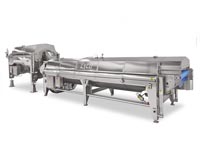
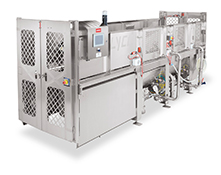
Across the industry, we’re seeing a shift from separate cookers and coolers toward integrated continuous systems. The reason is straightforward: transfer points are where clumps start.
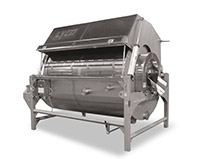
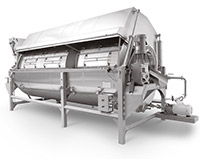
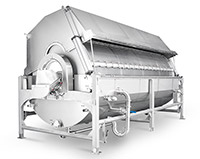
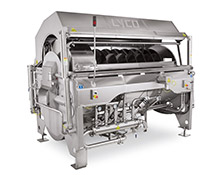
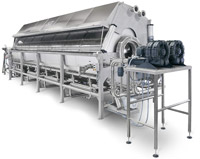
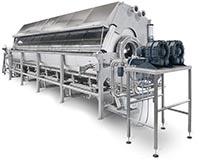
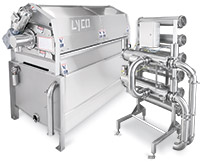
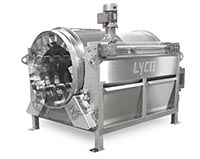
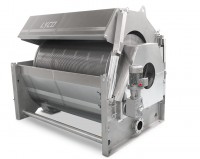
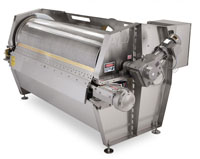
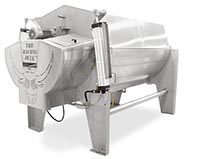
Lyco Manufacturing’s approach: integrated cook-and-cool reduces hold-up, reduces product handling, and improves repeatability—especially when matched with gentle agitation and sanitary, easy-to-clean design. We’ve built this into systems running at over 850 installations worldwide.
Related resources:
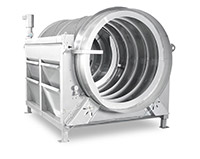
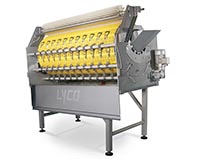
- Combination Cooker-Cooler (integrated continuous cook/cool)
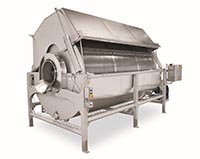
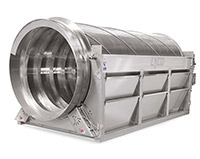
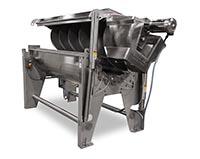
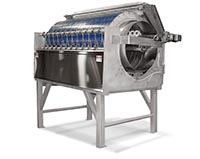
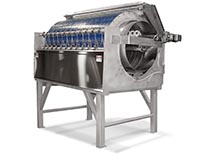
- Rotary Drum Blancher (continuous blanch/cook/re-hydration)
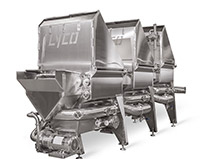
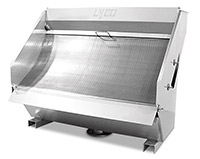
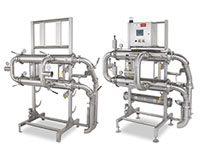
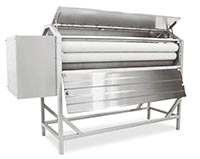
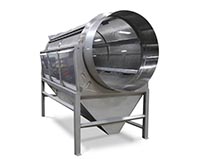
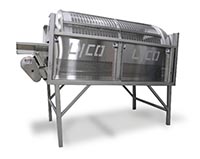
- Liquid-solid separation and wastewater screening
PRACTICAL TAKEAWAYS (WHAT TO CHANGE THIS QUARTER)
- Validate retention time under real throughput conditions
- Eliminate warm, wet dwell between cook and cool
- Add or upgrade fines/starch management in recirculated water loops
- Use recipe-driven setpoints per pasta cut and formulation
- Reduce mechanical shear points that create starch and tack
These aren’t equipment upgrades—they’re process discipline. Start here before you start shopping.
NEXT STEP
Want to sanity-check a continuous pasta cook/cool layout or troubleshoot clumping zones? We do this every week with processors running similar lines.
Questions? Call 920-623-4152