



PREVENTING PASTA CLUMPING IN FOOD PROCESSING: WHY “GOOD PASTA” FAILS ON THE PLANT FLOOR
Here’s what we see over and over: a processor sources quality pasta, dials in the cook time, and still ends up with clumped product that jams the filler and throws off package weights. The pasta isn’t the problem. The process is.
Preventing pasta clumping in food processing comes down to three variables working together—process timing, starch management, and handling energy. When throughput increases, labor gets tight, and SKU changeovers speed up, those variables drift. That’s when clumping shows up.
The market is pushing hard toward prepared meals, refrigerated kits, and IQF-ready components. That means more cook/chill and cook-quench-chill workflows—exactly where pasta is most likely to bridge, mat, and shear.
On the floor, clumping creates three expensive problems:
- Yield loss (breakage, fines)
- Rework (manual breaking, re-rinsing)
- Inconsistent downstream filling (weight drift, poor sauce adhesion, package voids)
ROOT CAUSES: WHERE PASTA CLUMPS IN A COOK/CHILL LINE
We’ve troubleshot hundreds of pasta lines. Most clumping events trace back to one or more of these conditions:
1) SURFACE STARCH ISN’T MANAGED
- Over-aggressive cooking, long dwell, or hot spots increase starch release
- Insufficient wash/quench action leaves a tacky layer that bonds piece-to-piece
- Water quality drift (hardness, temperature, carryover solids) changes starch behavior shift-to-shift
2) TRANSITION TIME IS TOO LONG (COOK → COOL)
Pasta clumps when it sits warm and wet in a low-motion zone. Discharge chutes, hoppers, dead legs, undersized conveyors, waiting for the next step—these are clump incubators.
3) HANDLING ENERGY IS WRONG (TOO MUCH OR TOO LITTLE)
- Too little motion = bridging and matting
- Too much mechanical agitation = surface damage, more starch release, more tack
4) CHANGEOVERS CREATE “HIDDEN” CLUMPING CONDITIONS
Faster SKU turns are the reality now. But short-clean practices leave behind residual starch film, fats/oils from prior products, and temperature setpoints that don’t match the next pasta cut. We’ve seen plants chase clumping for hours before realizing the prior product set them up for failure.
AN OPERATOR-MINDED CONTROL PLAN (WHAT TO ADJUST FIRST)
CONTROL #1: SET A STARCH BUDGET, NOT JUST A COOK TIME
Forget targeting “al dente” alone. Track an operating signal tied to clumping risk:
- Turbidity / solids in cook water and quench water (trend over the shift)
- Product surface tack and discharge behavior (does it free-flow or rope?)
- Breakage rate at transfer points
What this means on the floor: When starch load rises, clumping follows—often 10–30 minutes later as the line warms up and carryover increases. By the time you see clumps, the starch spike happened two batches ago.
CONTROL #2: SHORTEN THE WARM, WET WINDOW
Clumping accelerates when pasta stays in the critical tack zone before cooling. Food safety expectations are tighter than ever—plants need fast temperature pull-down to sub-40°F for both quality and shelf-life stability.
What this means on the floor: Reduce queue time, eliminate dead zones, and prioritize equipment that moves product continuously through cooling with minimal hold-up. Every minute of warm, wet dwell is working against you.
CONTROL #3: USE GENTLE, UNIFORM AGITATION THAT PREVENTS “ROPE” FORMATION
The goal is piece separation without surface damage. We see plants chase separation with aggressive paddles or high-drop transfers that actually create more starch and more clumping. It’s counterproductive.
What this means on the floor: Uniform hydraulic movement (vs. mechanical abuse) is typically the cleaner path for delicate shapes, fresh pasta, and filled products. Let the water do the work.
CONTROL #4: STANDARDIZE CHANGEOVER SETTINGS WITH RECIPE CONTROL
With more co-manufacturing and SKU proliferation, recipe-driven setpoints are becoming standard: cook temperature, dwell time, agitation intensity, quench rate, and cooling profile.
What this means on the floor: Treat pasta changeover like a validated process, not an operator art project. Documented setpoints, verified water temperature, verified discharge flow—every time.
INDUSTRY EXAMPLES: WHAT “CLUMPING” LOOKS LIKE IN REAL OPERATIONS
- Prepared meal components (macaroni, penne): Clumps form in the first cooling transfer, then break into irregular chunks that fill inconsistently and over/under-sauce in tray lines. Downstream gets the blame, but the clump was born upstream.
- Fresh/refrigerated pasta: Delicate surfaces smear under mechanical handling. Tack increases. Yield loss shows up as fines and mushy texture that customers reject.
- Cooked pasta for IQF: Poor separation pre-freeze causes clusters that don’t freeze uniformly. Customer complaints come back as “pasta bricks” that won’t portion correctly.
WHERE EQUIPMENT DESIGN MATTERS
Preventing pasta clumping in food processing is fundamentally about uniform cooking + controlled quench + rapid cooling + gentle handling in one coordinated flow path. That’s why many processors are consolidating steps instead of stacking standalone units that create dead zones and transfer damage.
Lyco Manufacturing’s perspective: uniform agitation and consistent thermal processing reduce starch-driven adhesion, and recipe-driven controls reduce operator variability. We’ve built over 2,300 systems with this approach.
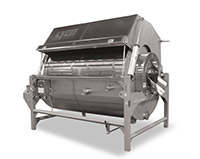
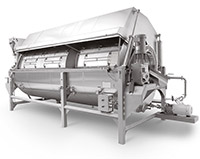
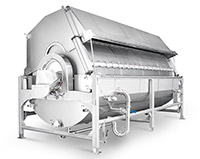
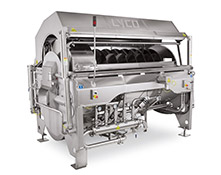
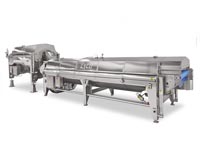
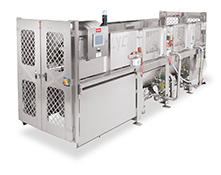
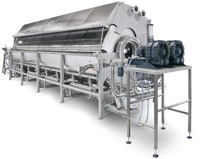
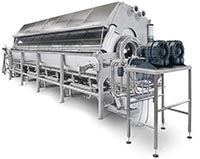
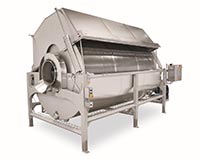
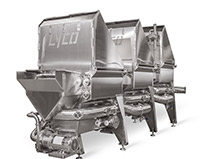
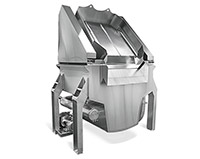
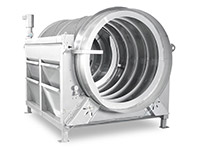
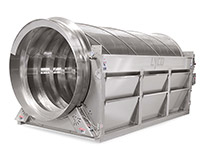
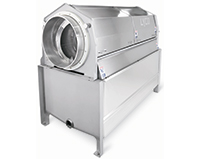
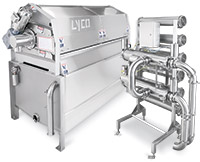
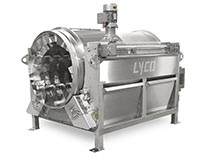
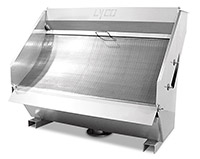
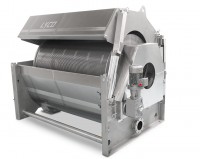
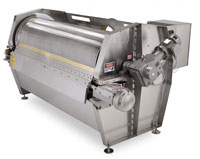
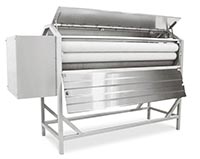
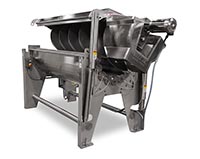
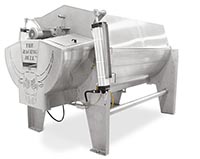
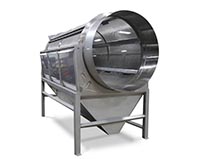
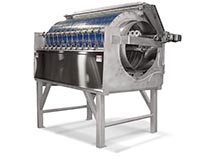
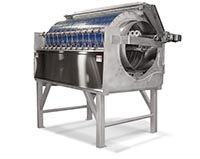
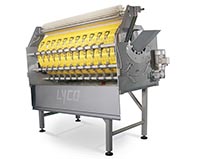
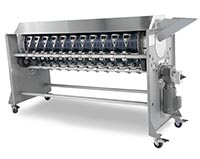
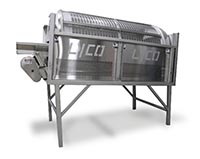
If you’re comparing equipment approaches, look at integrated cook/chill designs like the Versa-Flow™ Cooker Cooler (Cook-Chill and Cook-Quench-Chill capability) and related continuous systems.
Related resources:
- Versa-Flow™ Cooker Cooler
- Combination Cooker-Cooler
- Hydro-Flow® technology overview
QUICK CHECKLIST: TROUBLESHOOTING PASTA CLUMPING IN 30 MINUTES
- Verify cook exit temperature, dwell time, and water solids trend
- Confirm quench/cooling water temperature and flow, check for clogged screens
- Inspect discharge and first transfer for dead zones and product pile-up
- Reduce mechanical shear points, confirm gentle agitation where separation is needed
- Lock recipe setpoints for each cut (elbows ≠ penne ≠ shells)
NEXT STEP
If you want a process-focused conversation about preventing pasta clumping in food processing—cook/chill layouts, water/starch management, changeover practices—we’re here to help.