




PREVENTING PASTA CLUMPING IN INDUSTRIAL COOKERS: DESIGN RULES FOR MODERN COOK/CHILL LINES
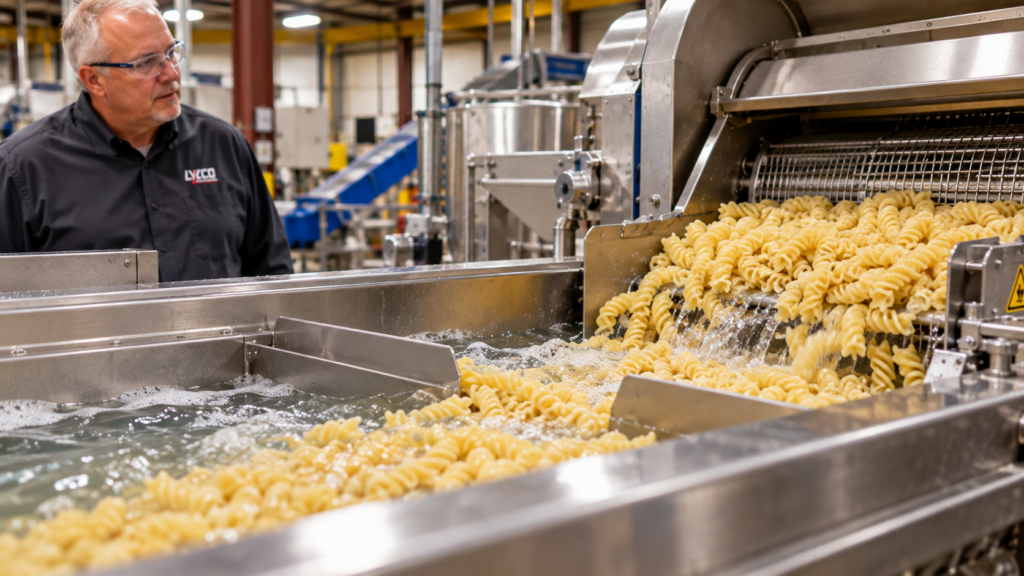
Industrial pasta lines are being modernized for three reasons: (1) more throughput in limited floor space, (2) tighter food safety and rapid chilling requirements, (3) fewer operators with higher expectations for repeatability.
When plants retrofit or expand, clumping is one of the fastest ways to expose design compromises. We see it constantly—older batch systems asked to behave like continuous cook/chill, and they can’t deliver.
This is a design-oriented guide to preventing pasta clumping in industrial cookers, focused on what to specify, what to validate, and what to standardize.
THE 5 DESIGN VARIABLES THAT DETERMINE CLUMP RISK
1) AGITATION UNIFORMITY (NOT JUST “MORE AGITATION”)
You need separation energy that is consistent across the full bed.
- Uniform agitation prevents nesting and matting
- Non-uniform agitation creates high-shear zones (starch release) and low-motion zones (piling)
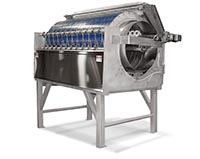
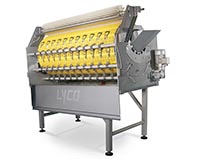
Lyco’s Hydro-Flow® agitation delivers controlled, uniform movement across the product bed—separation energy without excessive damage. Over 850 systems sold.
Related search terms: agitation design for continuous pasta cookers, uniform agitation prevents pasta sticking
2) FIRST-IN/FIRST-OUT DWELL TIME CONTROL
Clumping increases when dwell time spreads.
- Wide dwell distribution = mixed doneness = sticky + fragile pieces binding together
- Validate residence time at min/nominal/max throughput
Related search terms: FIFO cooking prevents clumping, residence time control in industrial pasta cooking
3) THERMAL STABILITY AND TEMPERATURE GRADIENTS
Temperature swings change starch gelatinization behavior.
- Specify tight temperature control and verify it holds during load changes
- Avoid uncontrolled gradients that cause partial gelatinization and tacky surfaces
4) COOKING + COOLING INTERFACE (WHERE MOST LINES FAIL)
The transfer from hot to cold is a clump factory if it’s slow or compressive.
- Integrated cook-and-cool designs reduce drop points and staging
- Faster cooling reduces the time pasta remains adhesive
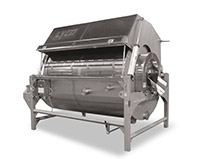
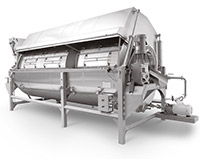
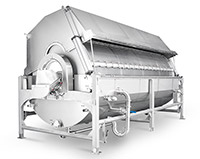
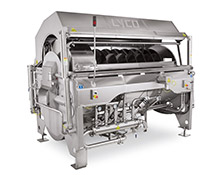
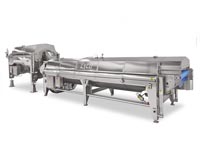
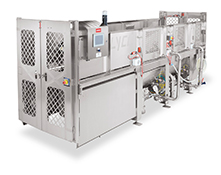
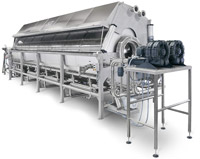
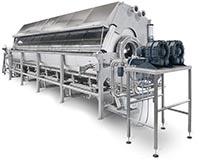
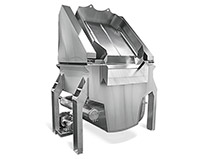
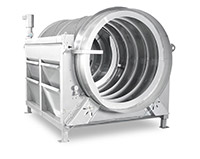
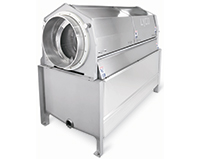
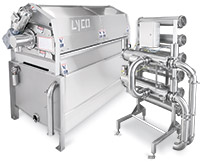
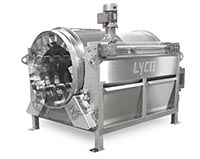
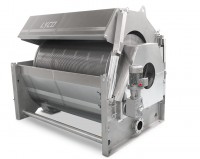
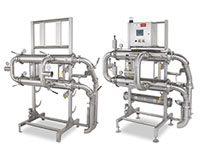
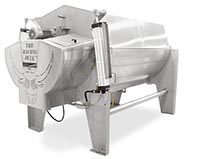
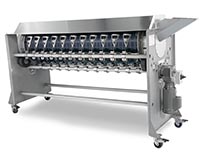
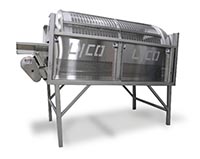
Lyco’s Clean Flow & Easy Flow puts cooking and cooling in a continuous process—no staging bins, no transfer compression, no extended tacky window. The Versa-Flow™ Cooker Cooler handles smaller-capacity, flexible cook-chill/cook-quench-chill applications.
Related search terms: cook chill pasta clumping, integrated cooker cooler prevents sticking
5) CLEANABILITY BY DESIGN (CIP COVERAGE + DRAINABILITY)
If a system can’t be cleaned quickly, it won’t be cleaned consistently.
- Look for full drainability, minimized harborage points, repeatable CIP coverage
- In high-changeover plants, cleanability directly impacts clumping because starch film becomes chronic
Related search terms: hygienic design pasta cooker, CIP design prevents pasta clumping
OPERATOR STANDARDS THAT KEEP A GOOD DESIGN FROM DRIFTING
Even the best system drifts without standards.
- Document a pasta “golden recipe”: feed rate, overflow, temps, dwell, cooling
- Add simple visual standards: water clarity bands, discharge behavior, clump scoring
- Trend KPIs: yield/recovery, rework rate, sanitation time, startup scrap
CLUMPING IS A SPECIFICATION PROBLEM AS MUCH AS AN OPERATION PROBLEM
Plants that eliminate clumping treat it like a design constraint, not a nuisance:
- Uniform agitation, controlled dwell, stable thermal profile
- Fast, controlled cooling
- CIP-ready, drainable construction that supports high-SKU reality
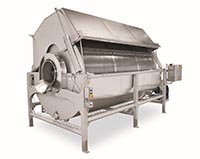
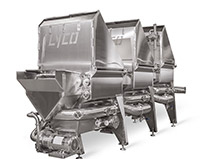
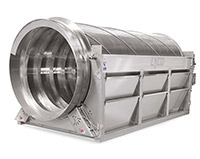
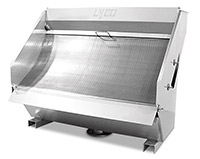
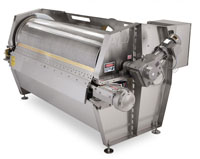
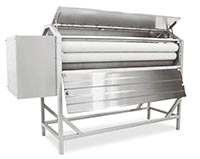
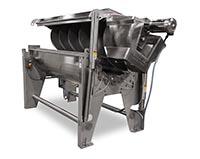
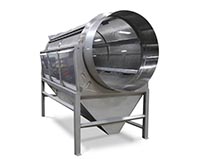
Lyco Manufacturing has been building continuous cook/chill systems for decades—over 850 systems installed. Technical resources on Versa-Flow™, Clean-Flow®, Temper-Flow®, the Rotary Drum Blancher, and the Combination Cooker-Cooler are available when you’re building a requirements list.