




ROI FOR PARTICULATES: WHY RICE, BEANS, AND PASTA EXPOSE BATCH LIMITS FAST
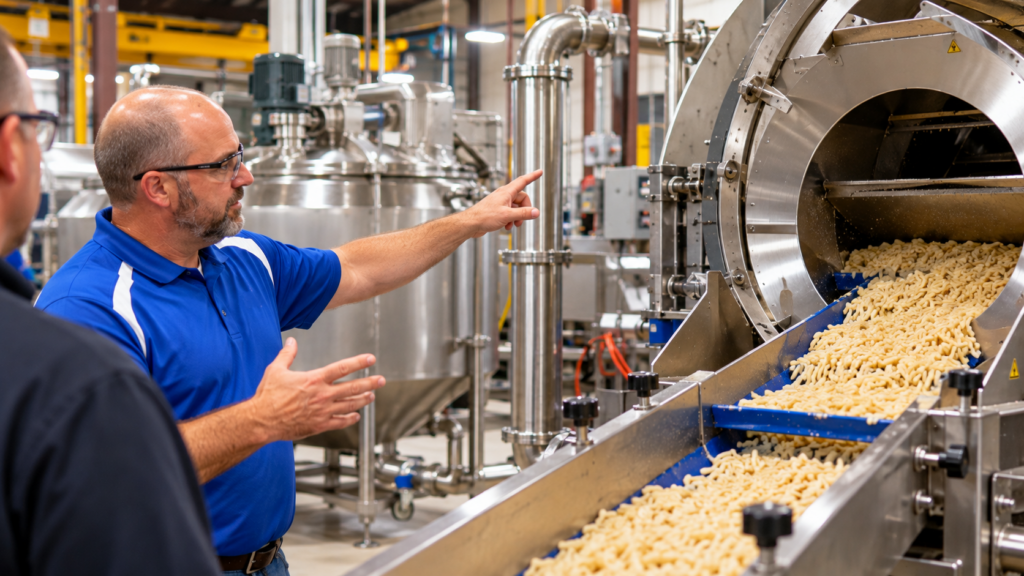
Batch kettles can produce good product. But particulate foods punish inconsistency. Rice, beans, pasta, vegetables—these products amplify small process issues into large, measurable losses:
- Moisture variation becomes drained-weight failure or texture complaints
- Over-agitation becomes breakage and fines
- Uneven heat transfer becomes under/overcooked pieces in the same batch
- Water turnover becomes wastewater cost and more screening problems
That’s why continuous cooker vs batch kettle ROI is often easiest to prove on particulate lines: the losses are visible, weighable, and tied directly to margin.
THE 4 ROI METRICS THAT MATTER MOST FOR PARTICULATES
1) MOISTURE CONTROL: QUALITY + DOWNSTREAM PERFORMANCE
For rice and beans, moisture isn’t just texture—it drives:
- Fill weights and net content compliance
- Sauce absorption and hold time behavior
- Freezing performance (IQF clumping, block formation)
- Reheat quality in microwavable meals
Continuous cooking approaches, especially first-in/first-out designs with tighter control, reduce variability across the run.
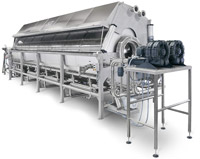
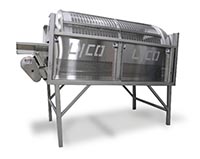
Temper-Flow® is purpose-built for fully absorbed, low-moisture rice—a different goal than “cook it in water and drain it.” That difference shows up downstream as more repeatable performance in blending, filling, and reheating.
Target keyword cluster: fully absorbed rice continuous cooker ROI, moisture control rice processing, rice cooker vs kettle payback, uniform cooking continuous.
2) YIELD/RECOVERY: SELLABLE POUNDS
Yield loss on particulate lines comes from:
- Sticking and clumping (lost product + rework)
- Breakage and fines
- Overcooked edges that slough off into water
- Excess carry-out solids that disappear into the drain
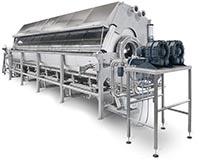
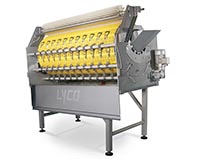
Clean-Flow® is a high-yield system—often 10–15% better recovery in the right use cases—due to uniform processing and agitation designed to protect product integrity.
Target keyword cluster: yield recovery continuous cooker, reduce pasta sticking losses, reduce fines in cooking, blancher cooker yield.
3) WATER + ENERGY INTENSITY: UTILITY COST + CONSTRAINT
Batch kettles create “reset water” habits:
- Dump-and-fill cycles
- High rinse volumes between products
- Higher solids in wastewater, which increases surcharge risk
Continuous systems can be configured to reduce turnover, stabilize process water quality, and integrate cooling strategies that improve total thermal efficiency.
Plants often have to upgrade screens when pushing more starch and fines into the drain—wastewater screening becomes part of the thermal processing conversation.
Target keyword cluster: water consumption continuous cooker vs kettle, wastewater surcharge cooking line, reduce BOD starch wastewater, process water reuse cooling.
4) CHANGEOVER + CLEANABILITY: THE MULTIPLIER EFFECT
Even if your utility and yield numbers look fine, changeover frequency multiplies every inefficiency. Sanitary continuous designs with CIP reduce:
- Labor hours
- Water/chemical consumption
- Time-to-validated-clean (a real constraint in RTE/high-care environments)
Clean-Flow® is RTE-grade hygienic construction for low care/high care, with a CIP-forward design that targets the root cause—manual cleaning variability.
CONTINUOUS COOKER VS BATCH KETTLE ROI: DATA YOU SHOULD COLLECT (NO VENDOR REQUIRED)
Capture these before you build a business case:
PRODUCT + QUALITY
- Moisture spec, standard deviation, and failure rate
- Drained weight variance
- Clump rate (% of lots requiring rework or screening)
- Breakage/fines (%), especially after cooling and conveying
PROCESS
- Time/temperature logs (actual, not setpoints)
- Retention time spread (batch-to-batch variability)
- Cooling time to target temperature and how often cooling is the bottleneck
COST
- Water usage per shift and per SKU
- Wastewater surcharges tied to BOD/TSS
- Sanitation labor hours per changeover
- Downtime minutes tied to cleaning, plugging, and startup instability
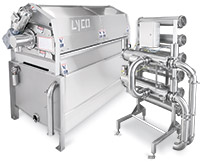
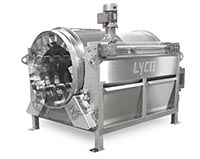
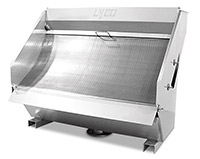
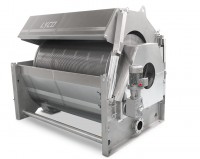
WHERE LYCO EQUIPMENT MAPS TO THESE ROI PROBLEMS
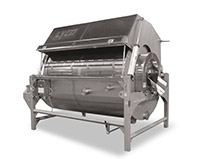
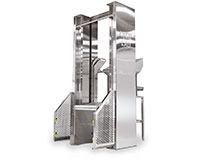
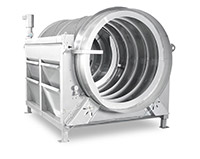
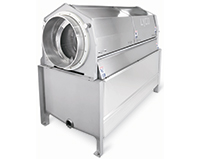
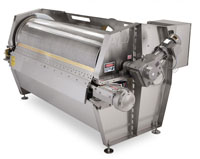
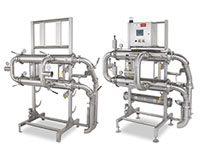
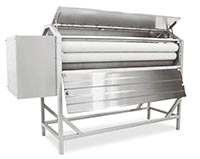
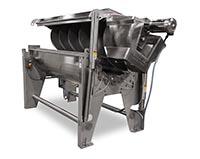
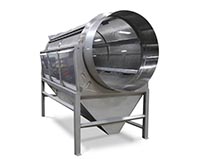
- Temper-Flow®: When rice moisture uniformity and full absorption drive ROI more than raw capacity.
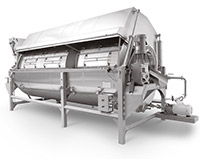
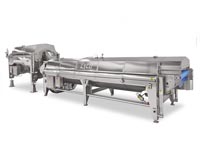
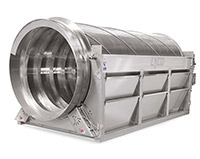
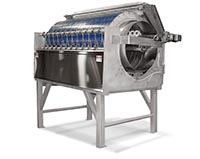
- Clean-Flow®: When multi-SKU particulate cooking needs sanitary design, yield, and fast changeovers. Over 120 sold.
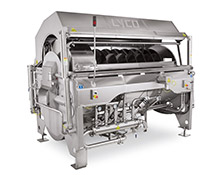
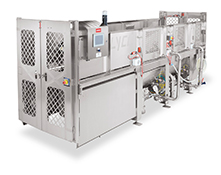
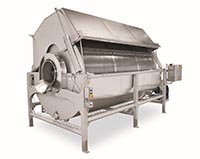
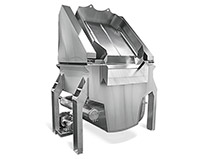
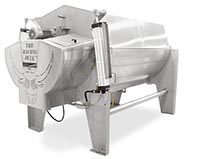
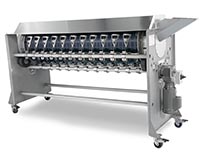
- Combination Cooker-Cooler: When consolidation and cooling speed are the constraint and you need one integrated continuous solution. Over 300 sold.
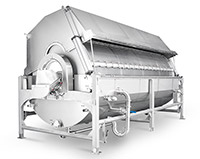
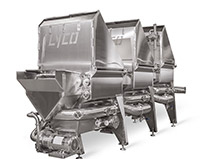
- Easy-Flow Cooler: When the best ROI lever is stopping the cook fast, improving texture, and stabilizing downstream handling.
PRACTICAL TAKEAWAYS
- For rice/beans/pasta, ROI is usually driven by moisture consistency + yield recovery + water/wastewater, not just labor.
- Batch kettles tend to hide losses in averages; continuous systems expose and control them through steady-state operation and automation.
- If cooling is limiting quality or throughput, evaluate cooking and cooling as one system—not separate boxes.
QUESTIONS? CALL 920-623-4152