




RTE FOOD PROCESSING SANITATION FOR MULTI-SKU LINES: HOW TO KEEP UP WITHOUT CUTTING CORNERS
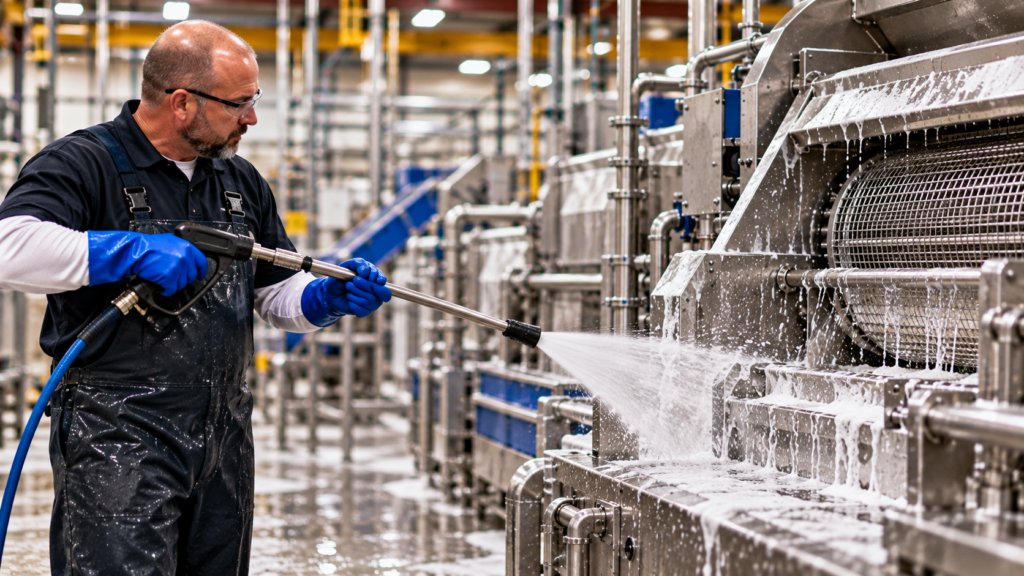
RTE food processing sanitation gets exponentially harder when the production schedule shifts from “one product all day” to six, ten, or twelve SKUs across pasta, rice, vegetables, beans, and proteins—often with allergens and different soil profiles. We see it every week. In that environment, the sanitation program has to do three things at once:
- Protect food safety and compliance
- Hit changeover windows without sacrificing throughput
- Reduce water, labor, and rework caused by inconsistent cleaning
This isn’t a “better checklist” problem. It’s a system design + standard work problem.
WHAT MULTI-SKU RTE PLANTS ARE SEEING ON THE FLOOR
Common symptoms we hear from operations and engineering teams:
- Sanitation becomes the bottleneck on high-mix days
- Pasta and rice generate sticky starch films, then cleanup time balloons
- Batch systems create heavy hang-up and clumping, then manual scraping becomes routine
- Cooling is too slow, product overcooks, soils bake on, yield drops, cleanup increases
- Allergen changeovers require extended teardown, schedule becomes fragile
Sound familiar? You’re not alone.
THE SANITATION-FRIENDLY MULTI-SKU LINE: 6 DESIGN PRINCIPLES
1) REDUCE PRODUCT DAMAGE TO REDUCE CLEANING
More breakage = more fines = more buildup in troughs, drains, and screens.
- Gentle handling, controlled agitation, and uniform thermal processing reduce the “mess” upstream.
2) CONTROL THERMAL PROCESSING TO AVOID “BAKED-ON” SOILS
Overcooked starch and proteins create films that resist rinse-only cleaning.
- Stable time/temperature control in blanching, cooking, cooling reduces stuck-on layers.
3) MINIMIZE OPEN PROCESSING BETWEEN COOK AND COOL
Every open transfer is a contamination and cleanup multiplier.
- Consolidating steps reduces surfaces, exposure, and time.
4) BUILD FOR RAPID CLEANOUT
A multi-SKU line needs:
- Fast drain-down, minimal hold-up volume
- Clean access to discharge transitions
- Simple, repeatable “clean to inspect” points
5) STANDARDIZE CHANGEOVERS BY SKU FAMILY
Group SKUs by:
- Soil type (starch vs protein vs fat)
- Allergen profile
- Risk level (high care vs low care)
Then create “family” sanitation cycles that are validated once and executed repeatedly.
6) MAKE SANITATION MEASURABLE
Track:
- Minutes per changeover
- Water per changeover
- First-pass verification rate
- Reclean events and their causes
- Wastewater solids load during clean
What gets measured gets engineered.
INDUSTRY EXAMPLE PATTERN: PASTA/RICE + VEGETABLES ON ONE LINE
In mixed particulate lines, the operational pattern is predictable:
- Pasta/rice runs leave starch films, stickiness drives hang-up
- Vegetable runs create particulate fines, skins, and drain loading
- Switching between them without a structured approach leads to longer cleans and verification failures
Plants that stabilize the schedule typically:
- Improve cooling performance to stop cooking fast (reducing starch paste formation)
- Reduce clumping and hang-up through better agitation/handling
- Move toward systems designed for repeatable CIP and fast access points
WHERE EQUIPMENT PLATFORM CHOICES AFFECT SANITATION REALITY
Here’s where we’ll give you our point of view: sanitation outcomes are heavily determined by processing equipment architecture.
In continuous RTE lines, processors often evaluate:
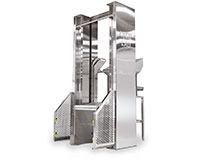
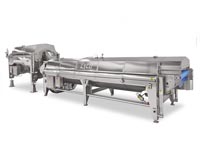
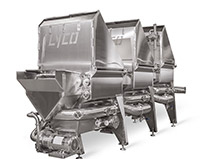
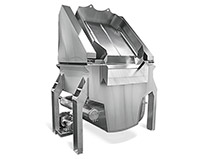
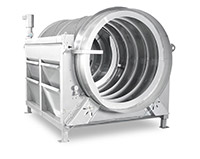
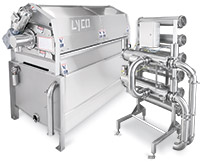
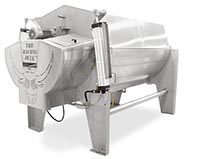
- Continuous blancher/cooker/cooler platforms built for hygienic construction and CIP discipline (e.g., Clean-Flow®)
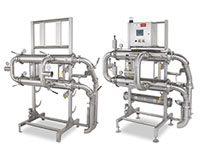
- Compact cook-quench-chill systems for flexible portfolios and recipe-driven consistency (e.g., Versa-Flow™)
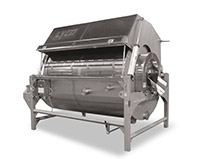
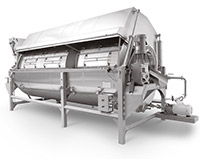
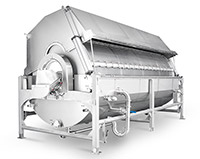
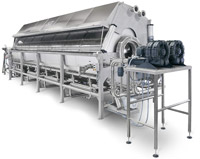
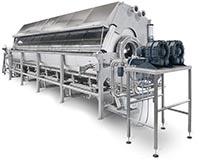
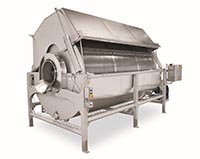
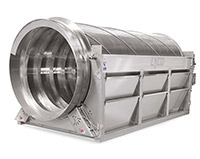
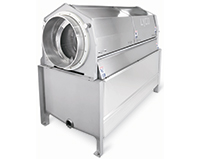
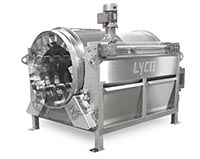
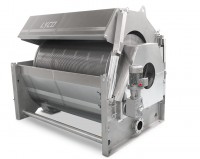
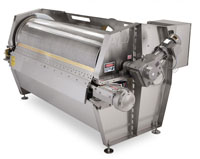
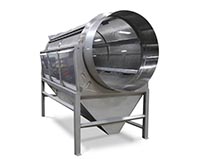
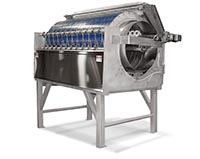
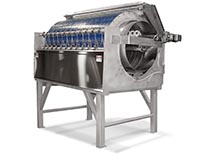
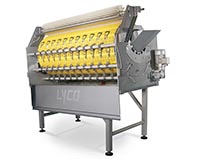
- Rotary drum blanching/cooking for high-volume consistency and clean access (e.g., Rotary Drum Blancher—over 450 installations worldwide)
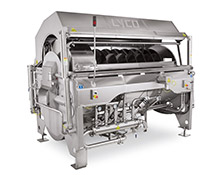
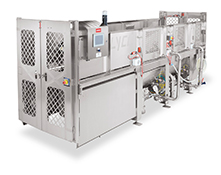
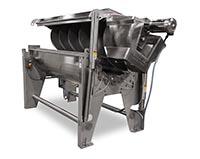
- Integrated cook-and-cool to reduce transfers and manage CIP in one system (e.g., Combination Cooker-Cooler)
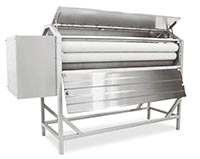
- Ultra-fast cooling approaches to stop the cook, protect quality, and reduce sticky cleanup drivers (e.g., Easy-Flow Cooler)
PRACTICAL TAKEAWAYS: THE MULTI-SKU SANITATION CHECKLIST THAT ACTUALLY HELPS
- Build SKU families and match them to validated sanitation cycles
- Fix hang-up points first (discharge transitions, dead legs, non-drainable sections)
- Reduce overcooking and slow cooling—these are sanitation multipliers
- Treat wastewater screening and solids capture as part of sanitation capacity
- Train to variance: focus on the (5) steps where outcomes change by operator
READY TO SCALE MULTI-SKU THROUGHPUT WITHOUT ADDING SANITATION HEADCOUNT?
If you’re trying to scale multi-SKU RTE throughput without adding sanitation labor, we can help you map your changeover targets to hygienic design and continuous processing best practices.