



SCALING INDUSTRIAL SOUS VIDE PROCESSING EQUIPMENT: THE BOTTLENECK IS ALMOST ALWAYS COOLING
SCALING INDUSTRIAL SOUS VIDE PROCESSING EQUIPMENT: THE BOTTLENECK IS ALMOST ALWAYS COOLING
Most “industrial sous vide” conversations start with cooking—water baths, combi systems, retorts, kettles. Makes sense. That’s where the process begins.
But in commercial plants running real volume, the throughput constraint typically shows up later: cooling capacity, cooling uniformity, and post-cook pouch handling. That’s where lines slow down, quality varies, and QA starts asking hard questions.
With RTE demand up, SKU counts rising, and labor staying tight, processors are searching for high-throughput sous vide cooling systems, continuous pouch chillers, and industrial sous vide lines for ready meals—not because cooking is solved, but because cooling is where quality and compliance get won or lost.
SOUS VIDE QUALITY = TEMPERATURE CONTROL + TIME CONTROL + PACKAGE CONTROL
At scale, the “sous vide effect” (texture, moisture retention, consistent doneness) depends on:
- Repeatable cook profile
- Minimal post-cook overprocessing
- Fast transition to safe temperatures
- Intact packaging (seal integrity, minimal scuffing, no corner failures)
When cooling is slow or uneven, you’ll see downstream symptoms:
- Variable shelf-life, inconsistent viscosity, separation in sauces
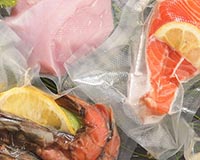
- Purge and texture loss in protein-heavy pouches
- Higher reject rates from seal stress and handling damage
- QA holds, extra sampling, longer release cycles
The cook can be perfect. If the cooling step isn’t controlled, you’ll still have problems.
THE MARKET REALITY: VALIDATION EXPECTATIONS ARE RISING
Plants are dealing with:
- FSMA-style preventive controls: documentation matters, not just outcomes
- Customer requirements for traceable thermal and cooling records
- Higher frequency of process deviations due to short staffing and changeovers
So the equipment conversation shifts from “can it cool?” to “can it cool predictably, across pouch sizes, across shifts, with data you can defend?”
That’s why FIFO and uniform agitation are not optional features in a modern industrial sous vide cooling step. They’re baseline requirements.
COMPARING INDUSTRIAL COOLING APPROACHES FOR SOUS VIDE POUCHES
1) DELUGE / SPRAY BELT COOLING
Best for: Some high-volume lines with consistent pouch formats
Watch-outs:
- Large footprint, high water and pump loads
- Uneven cooling if pouch contact varies
- Belt maintenance, sanitation complexity
2) STATIC IMMERSION TANKS
Best for: Low throughput, limited SKU variety
Watch-outs:
- Inconsistent residence times, manual loading
- Temperature stratification, “hot pockets”
- Hard to prove FIFO and repeatability
3) CONTINUOUS SUBMERGED AGITATION COOLING
Best for: High-mix, high-volume pouch operations
Why it’s trending:
- Stronger and more uniform heat transfer
- Controlled flow for FIFO and validation
- Water-cushioned pouch handling for damage reduction
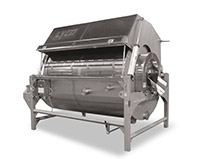
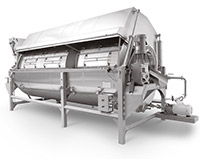
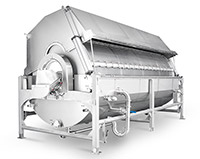
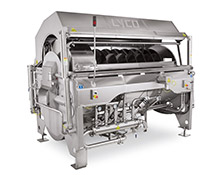
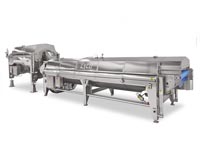
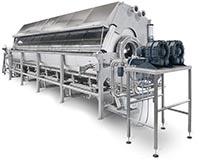
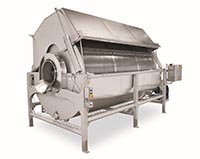
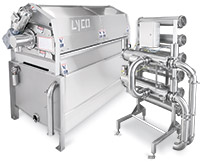
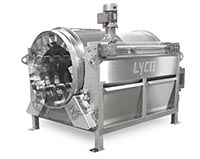
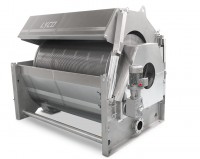
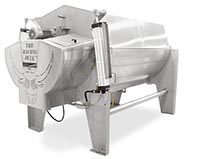
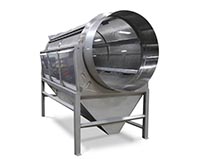
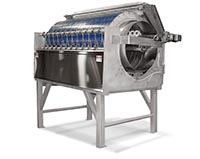
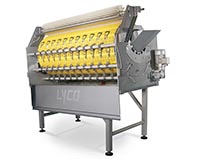
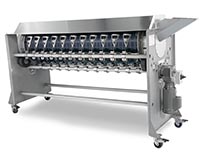
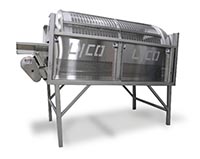
This is where Hydro-Flow® submerged agitation stands apart: it targets what plants struggle with—uniform cooling, gentle handling, and predictable residence time—without requiring massive floor space or excessive water consumption.
WHAT ENGINEERING AND QA TEAMS SHOULD SPEC (BEFORE THEY SPEC A BRAND)
Use this checklist to keep internal stakeholders aligned:
PROCESS AND VALIDATION
- Target exit core temperature by SKU
- Max allowable time in the danger zone
- Residence time distribution (not just average)
- Data capture plan (sensors, logging, verification routine)
OPERATIONS
- Changeover time between pouch sizes
- Line integration points (filler discharge, dryer, case pack)
- Sanitation access and cleaning frequency
PACKAGING RISK
- Abrasion points, corner wear, seal stress
- Pouch tracking, pile-ups, pinch points
UTILITIES
- Water consumption model (make-up rate)
- Energy balance (heat removal vs. recirc strategy)
- Footprint and layout constraints
Get these answers documented. They’ll drive better equipment conversations.
WHERE LYCO AND CHILL-FLOW™ SHOW UP IN THE DECISION
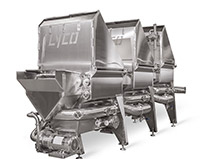
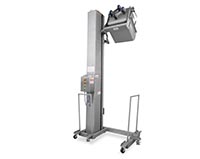
Lyco Manufacturing is known across blanching, cooking, cooling, and wastewater screening because the designs are built around plant-floor realities—high throughput, limited labor, and repeatable process outcomes. Over 2,300 cookers sold. Over 850 Hydro-Flow® systems in the field.
For sous vide pouch processors, Chill-Flow™ is positioned as a superior alternative to deluge belts, spirals used as coolers, and static tanks because it emphasizes:
- Faster, safer, more uniform cooling
- Smaller footprint with continuous operation
- True FIFO for process control
- Gentle submerged handling to reduce pouch damage
PRACTICAL TAKEAWAYS FOR AWARENESS-STAGE TEAMS
- If you can’t explain your cooling step in one sentence—target core temp + time + method—you can’t validate it.
- If your line “works” only when one experienced operator is present, your cooling and flow control are under-specified.
- If QA is increasing hold times, you likely have cooling variation, not just documentation gaps.
Start with the cooling step. That’s where most plants find their constraint.
Questions? Call 920-623-4152