



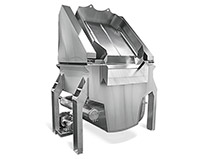
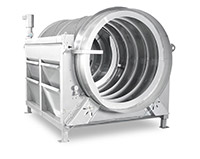
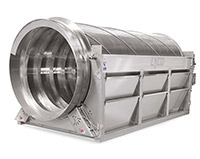
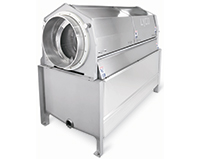

WHY DWELL TIME CONTROL DECIDES ROTARY DRUM VS BELT COOLER FOR POUCHES
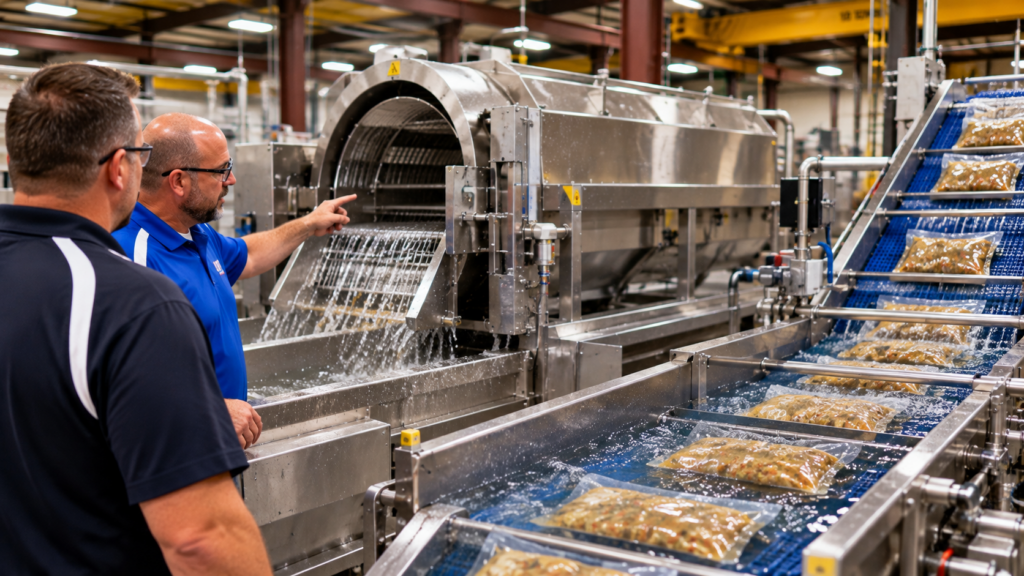
Most “cooling problems” show up as quality problems: puffed pouches, sauce separation, over-soft textures, seal failures, or micro-leaks that pass initial checks and fail in distribution.
When teams compare rotary drum vs belt cooler for pouches, they often miss the root variable driving all of that: residence time distribution—the spread between the shortest-cooled pouch and the longest-cooled pouch.
If you’re running hot-fill soups, sauces, chowders, sous-vide meals, or pouched pet foods at commercial scale, you’re not optimizing “average cooling.” You’re managing the coldest pouch and the shortest dwell under real production variability.
THE REAL KPI: SHORTEST-DWELL POUCH UNDER WORST-CASE CONDITIONS
Operational reality in 2026:
- Higher SKU mix, smaller batch runs, frequent changeovers
- More frequent micro-stops (labor gaps, downstream case packer issues)
- Increased QA documentation expectations (digital records, lot traceability)
That combination makes FIFO and dwell control more valuable than ever. A cooler that can’t prove consistent residence time becomes a compliance liability—and a hidden source of customer complaints.
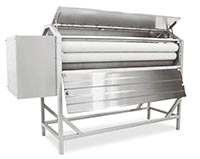
BELT COOLERS: DWELL IS “SET,” BUT NOT ALWAYS “CONTROLLED”
A belt speed setting does not guarantee every pouch gets the same dwell.
WHERE VARIATION COMES FROM
- Bed depth variation (overlap, rafting, pouch-to-pouch friction)
- Lane mixing as pouches drift laterally
- Start/stop events changing local dwell time
- Water delivery inconsistency (plugged nozzles, uneven deluge coverage)
WHAT TO ASK IN AN AWARENESS-STAGE EVALUATION
- How does the system prevent overlap at your target pouches/min?
- What is the documented residence time spread at max load?
- What controls exist to stabilize water delivery and temperature?
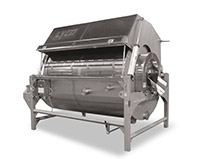
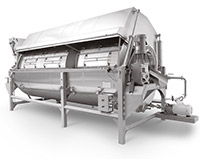
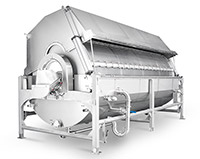
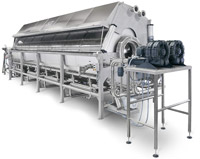
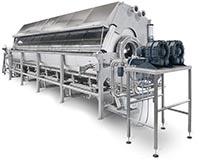
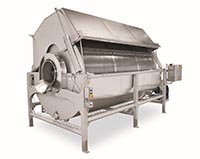
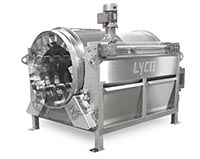
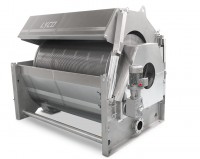
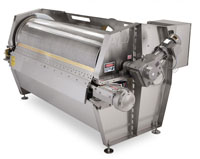
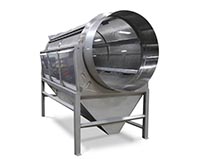
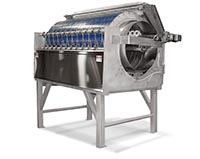
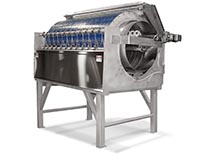
ROTARY DRUM COOLERS: MIXING HELPS, BUT LOADING CHANGES DYNAMICS
Drum systems can reduce some “coverage” issues because pouches are in motion relative to water. But the drum’s behavior changes with:
- Load level
- Pouch buoyancy and fill composition
- Package geometry (spouts, corners)
WHAT TO ASK
- What is the minimum dwell at low load vs high load?
- What is the damage rate threshold for your pouch format?
- How is sanitation verified and documented?
VALIDATION: ENGINEERING AND QA NEED THE SAME ANSWERS
Cooling equipment selection is increasingly a joint engineering/QA decision. A validation-ready cooler supports:
- Repeatable time/temperature mapping
- Worst-case pouch identification
- Stable process parameters (water temperature, agitation, throughput, dwell)
A system that cools fast but can’t be characterized easily becomes a long-term compliance and customer-complaint risk.
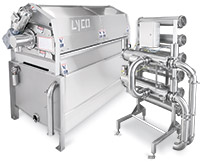
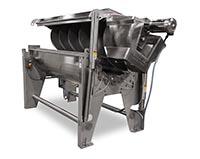
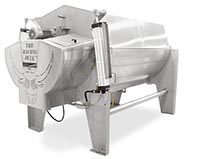
HOW CONTROLLED SUBMERGED AGITATION ADDRESSES THE DWELL PROBLEM
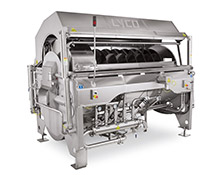
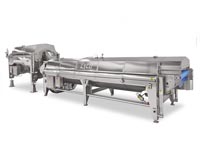
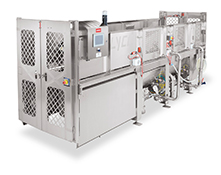
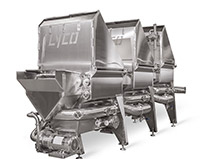
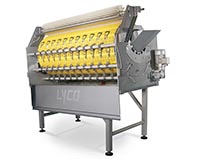
Lyco Manufacturing’s viewpoint is blunt: when dwell time and FIFO are the core requirements, you want a system designed around controlled product flow, not just conveyance mechanics.
Chill-Flow™ delivers:
- True first-in/first-out flow (tight residence time distribution)
- Patented Hydro-Flow® submerged agitation (uniform external heat transfer)
- Gentle, water-cushioned handling (reduced pouch damage)
- Compact layout for high-capacity lines
We’ve installed these systems across food and pet food operations where processors needed consistent cooling across multiple pouch sizes—and where validation documentation had to hold up under audit scrutiny.
ACTIONABLE TAKEAWAYS FOR YOUR COOLING SPEC
Before you request quotes or layouts, define these in writing:
1) COOLING TARGET
Discharge core temperature, allowable variance, max time in danger zone
2) WORST-CASE DEFINITION
Largest pouch, highest viscosity, highest fill temp, tightest seal format
3) DWELL REQUIREMENT
Minimum dwell at peak rate, and during micro-stops
4) HANDLING REQUIREMENT
Acceptable scuffing, corner damage, leak rate threshold
5) VALIDATION PLAN
How you will map, record, and re-verify after changes
These items make your rotary drum vs belt cooler for pouches evaluation faster and more objective—and they prevent a cooler from becoming the hidden constraint in your food safety plan.